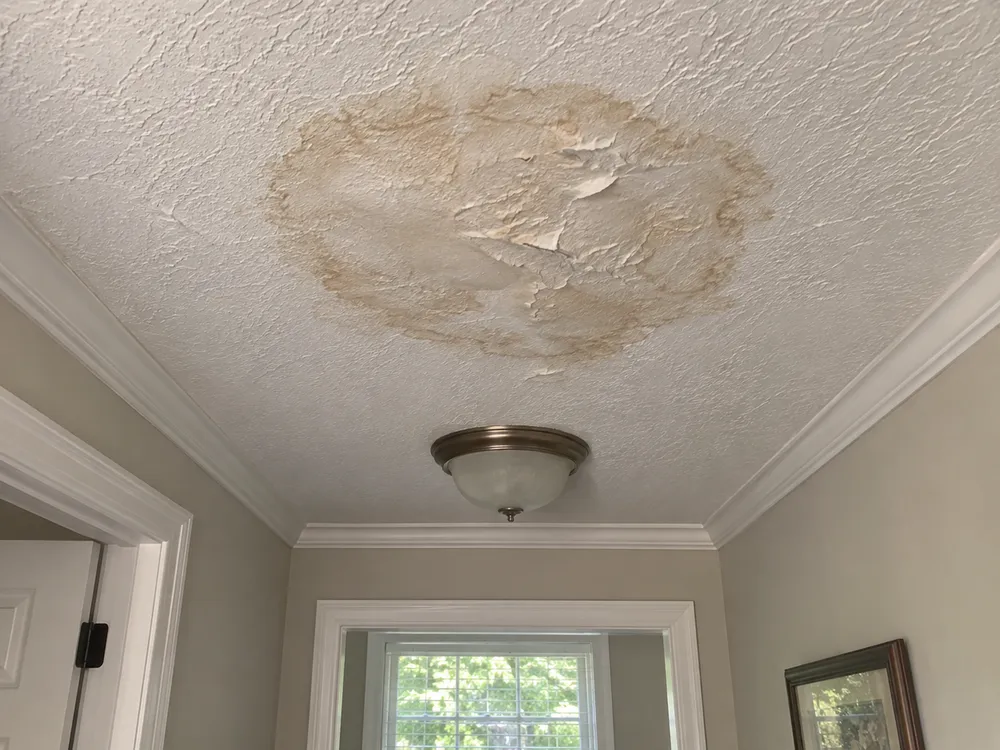
Why is my shower leaking through the ceiling?
Common sources are a failed shower pan, a loose drain, a leaking valve or supply line in the wall, and cracked grout or caulk that lets water behind the tile. If the stain appears only during showers, the drain or tile is more likely than a supply line, which leaks all the time.
How can I narrow it down?
Check the water meter. EPA WaterSense suggests reading it before and after two hours with no water use; if it moves, a supply line may be leaking (EPA WaterSense). A plumber can test the drain and pan separately.
What should I do about the wet ceiling?
Stay out from under a sagging section. The Red Cross says a sagging ceiling is wet, heavy and dangerous (American Red Cross). Drywall without swelling and with intact seams may be dried in place; otherwise it is replaced (EPA).
Is a leaking shower covered?
Often not, if it has leaked a little at a time. Washington's insurance commissioner lists damage from gaps between building materials, and water damage that develops over more than a couple of days, as gradual leaks insurers usually don't cover (Washington OIC).
Common questions
Can I keep using the shower?
Use a different one until the leak is found, so the ceiling and framing can dry.
Will regrouting stop the leak?
Only if the grout is the source. A failed pan or drain needs a plumber.
Is there mold above the ceiling?
There may be, if the leak has gone on for a while. The EPA lists the back side of drywall as a common hidden spot.
Related guides
Sources
- EPA WaterSense: Fix a Leak Week
- American Red Cross: checking your home's structural elements
- EPA: Mold Remediation in Schools and Commercial Buildings, Table 1
- Washington Office of the Insurance Commissioner: leaks, water damage and mold
- EPA: A Brief Guide to Mold, Moisture and Your Home
Last reviewed November 13, 2026. This guide is general information, not legal, insurance or medical advice.