Can I clean up water damage myself?
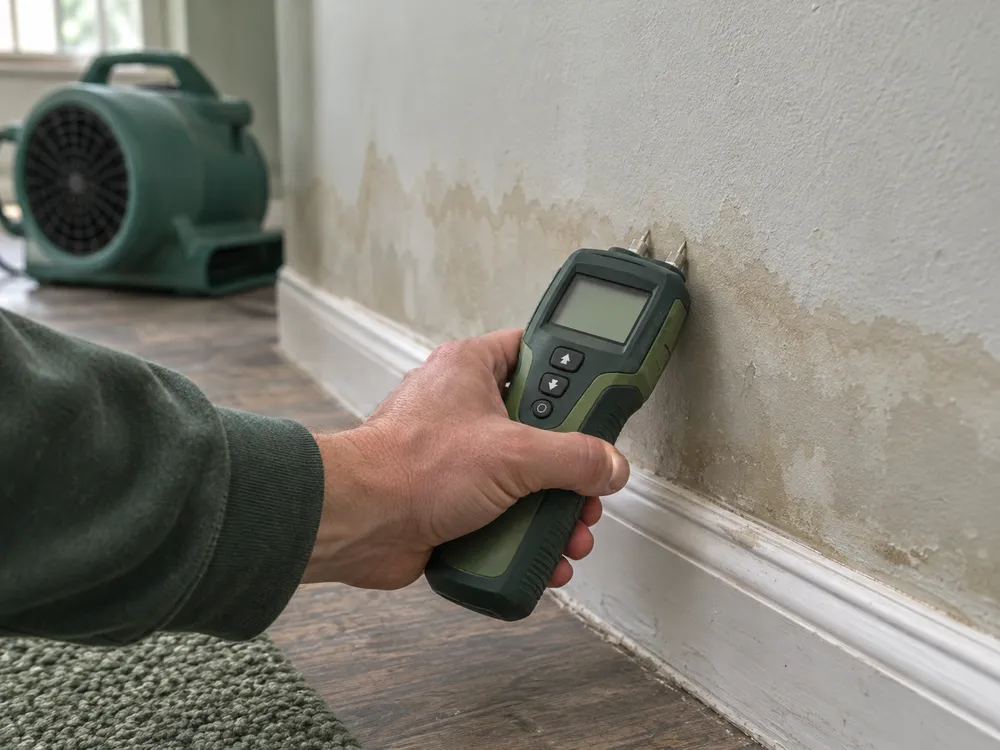
A small spill of clean water on a hard floor, caught right away, is usually something you can handle yourself. Water that has soaked carpet pad, run inside walls, reached a crawl space or come from sewage or a flooded creek usually needs professional drying equipment and moisture meters.
How does the type of water change the cleanup?
Restoration crews sort water into three categories based on how contaminated it is. Category 1 is clean water, Category 2 carries significant contamination, and Category 3 is grossly contaminated, such as sewage or rising water from a creek. The category decides what can be dried and what has to come out.
- Category 1: clean water from a sanitary source, such as a burst supply line, a water heater or rain through the roof (Massachusetts DPH quick reference).
- Category 2: often called gray water, such as a dishwasher or washing machine overflow, or a sump pump failure (Massachusetts DPH).
- Category 3: grossly contaminated water, including sewage, waste line backflow from beyond a trap and rising water from rivers or streams (IICRC).
Time and temperature can change the category, so clean water that sits can get worse (IICRC).
What can be saved and what has to go?
Hard, non-porous items like tile, metal and sealed wood furniture can usually be cleaned and dried. Porous materials that soak up water, such as carpet pad, insulation and the lower part of drywall, are often removed, and the dirtier the water, the more comes out.
Once mold grows in insulation or drywall, those materials have to be removed and replaced (CDC).
How fast does cleanup need to happen?
Fast. The EPA says to dry water-damaged areas and items within 24 to 48 hours to prevent mold growth (EPA). If you cannot get a room dry in that window, call for help sooner rather than later.
What should I ask a cleanup company?
- Will you give me daily moisture readings in writing?
- What are you removing, and why can it not be dried in place?
- Do you bill my insurer directly, or do I pay and get reimbursed?
- Is the rebuild included, or is that a separate estimate?
- Can I see your Georgia contractor license and certificate of insurance?
Common questions
Do I need to wear anything for cleanup?
For clean water, gloves and boots are sensible. For sewage or floodwater, it is safer to leave the cleanup to a professional with contaminated-water experience.
Should I throw out wet carpet?
Carpet soaked with clean water can sometimes be dried and saved, but the pad usually cannot. Carpet soaked with sewage or floodwater is usually thrown out.
Is cleanup the same as restoration?
Cleanup is part of it. Restoration also includes drying the structure and rebuilding what was removed.
Related guides
Sources
- EPA: A Brief Guide to Mold, Moisture and Your Home
- IICRC: Category of water damage position statement
- Massachusetts DPH: water damage quick reference
- CDC: Facts about Stachybotrys chartarum
Last reviewed November 13, 2026. This guide is general information, not legal, insurance or medical advice.