What is water removal?
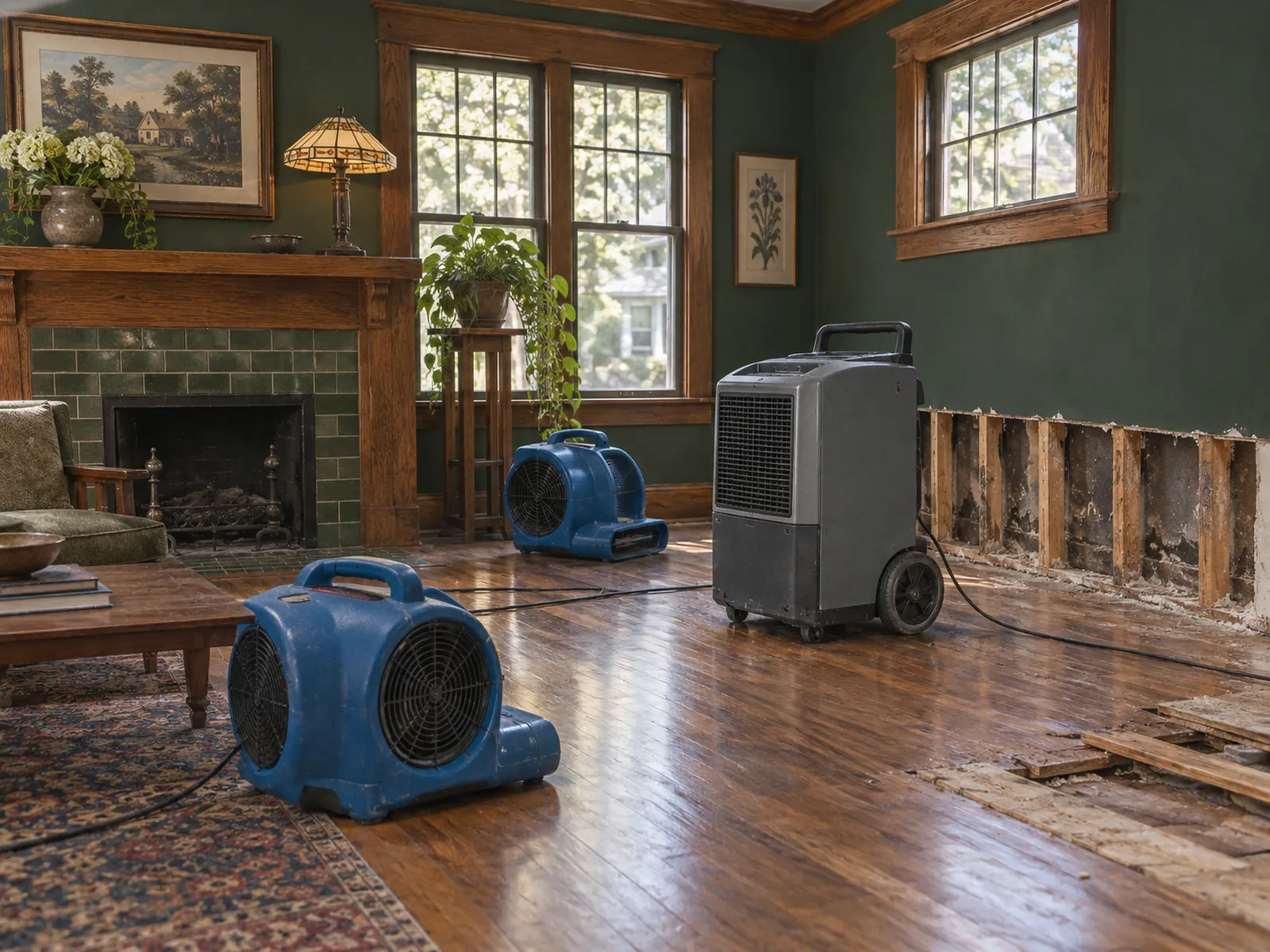
Water removal, also called water extraction, is pulling standing and soaked-in water out of a home with pumps and extractors. It is the first step of a water damage job. It does not dry the walls, subfloor or framing, which is what mitigation does next.
What should I do before the crew arrives?
Stop the water if you can, keep away from wet areas that have electrical outlets or cords in them, and take photos of everything before anything is moved or thrown out. Then move furniture and valuables off wet floors.
- Shut off the main water valve if a pipe or appliance line is leaking.
- If water is near outlets, cords or the electrical panel, stay out of it and leave the power to the utility or an electrician.
- Photograph and video each room, including the water line on walls.
- Lift furniture onto blocks or foil so legs do not stain wet carpet.
- Call your insurer to open a claim.
How do crews extract water?
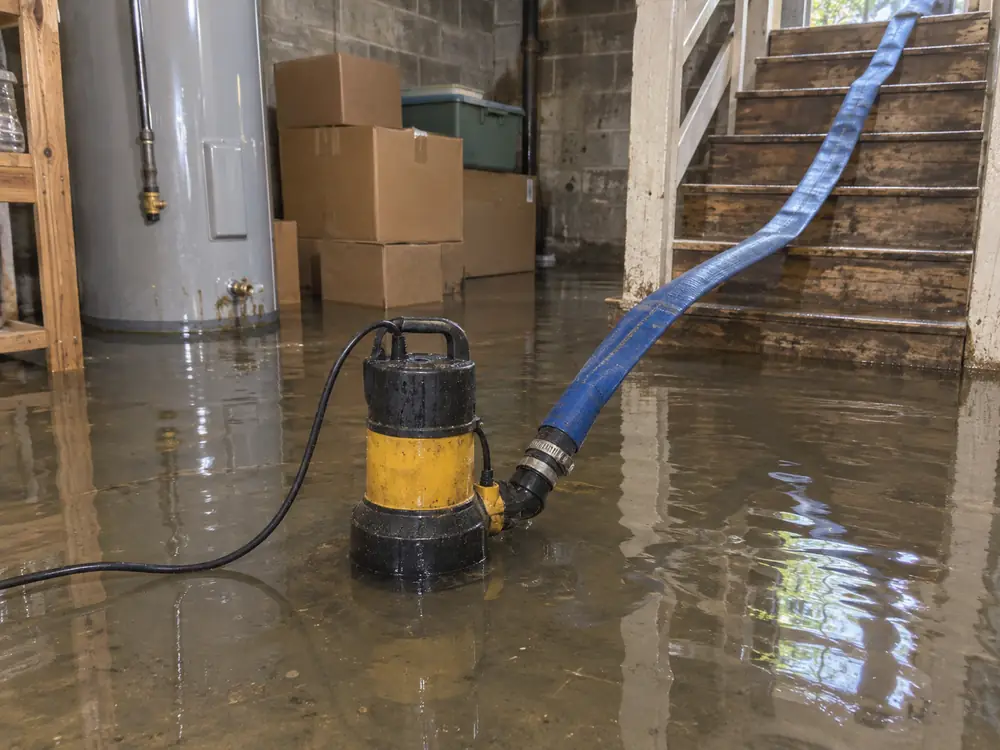
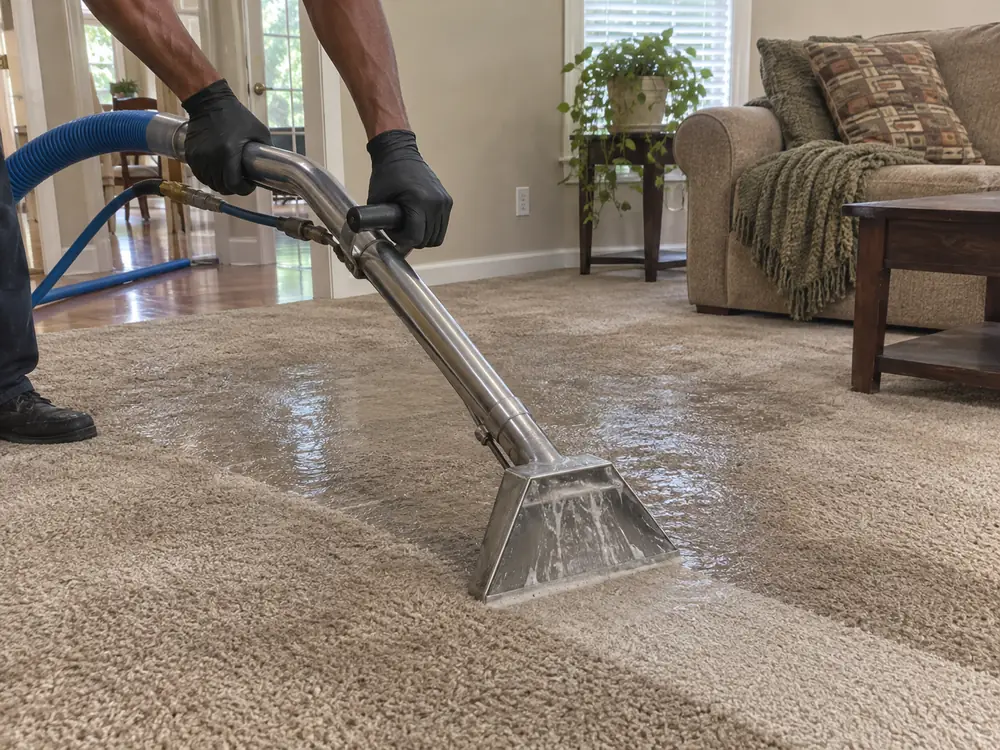
Crews use submersible pumps for deep standing water, then truck-mounted or portable extractors to pull water out of carpet and pad. Wet carpet pad is often removed because it holds water and is hard to dry in place.
Does it matter where the water came from?
Restoration crews sort water into three categories based on how contaminated it is. Category 1 is clean water, Category 2 carries significant contamination, and Category 3 is grossly contaminated, such as sewage or rising water from a creek. The category decides what can be dried and what has to come out.
- Category 1: clean water from a sanitary source, such as a burst supply line, a water heater or rain through the roof (Massachusetts DPH quick reference).
- Category 2: often called gray water, such as a dishwasher or washing machine overflow, or a sump pump failure (Massachusetts DPH).
- Category 3: grossly contaminated water, including sewage, waste line backflow from beyond a trap and rising water from rivers or streams (IICRC).
Time and temperature can change the category, so clean water that sits can get worse (IICRC).
When is water removal not enough?
Water removal is not enough when water has wicked into drywall, soaked under flooring or reached a crawl space. Those areas need drying and monitoring. The EPA says to dry water-damaged areas within 24 to 48 hours to prevent mold growth (EPA).
Is it safe to run a pump or generator to get water out?
Never run a gasoline pump, generator or pressure washer inside the house, basement or garage, or less than 20 feet from a door, window or vent. The CDC warns these engines produce carbon monoxide. Electric equipment, cords and outlets must be completely dry, and an electrician should check them if you are unsure (CDC).
- Keep extension cords out of standing water and off wet carpet.
- If the outlet you need is in a wet room, do not use it.
- Run the pump discharge hose outside and away from the foundation so the water does not come back in.
Can wet carpet be saved?
It depends on the water and how long it sat. Carpet soaked with clean water that is extracted and dried quickly can often stay, though the pad underneath is usually replaced. Carpet soaked with Category 3 water, such as sewage or creek water, is usually removed because it cannot be cleaned well enough.
Ask the crew to note on the estimate whether carpet is being dried in place or replaced, and why. If it is replaced, keep a sample for the adjuster.
What about water in a basement or crawl space?
Basements usually need a pump first, then extraction and dehumidifiers. Crawl spaces are harder: water sits on the soil, the vapor barrier and insulation may have to come out, and the floor joists and subfloor above need meter readings. Ask the crew to show crawl space readings, not just the rooms above.
For more detail, see flooded basement cleanup and structural drying.
What happens on a water removal visit?
A typical first visit has six parts: a walkthrough with photos, making sure the source is stopped and power is safe, extracting the water, mapping wet areas with a meter, setting up drying equipment, and leaving you a written scope. Most of this happens in the first few hours.
- WalkthroughThe crew looks at every wet room and photographs it before moving anything.
- Source and powerThey confirm the leak is stopped and whether any circuits need to stay off.
- ExtractionPumps for deep water, then extractors for carpet and hard floors.
- Moisture mappingA meter shows how far the water traveled under floors and into walls.
- Drying setupAir movers and dehumidifiers are placed, and wet materials are marked for removal.
- PaperworkYou should get a written scope, the photos and the first set of readings.
For how water removal is priced and Atlanta labor rates, see Atlanta water damage costs.
What should I move or protect while I wait?
Move furniture, electronics and valuables to a dry area or cover them with plastic. Roll up carpet if you can, or lift furniture off wet carpet, because stains and dyes from furniture can leach into it. Turn off the electricity only if you can reach the panel safely (The Hartford).
- Pick up rugs, papers, books and anything on the floor.
- Take photos before you move anything.
- Prop open cabinet doors and closet doors in the wet area.
- Keep pets and children out of the wet rooms.
What should I ask the water removal company?
- Will you give me daily moisture readings in writing?
- What are you removing, and why can it not be dried in place?
- Do you bill my insurer directly, or do I pay and get reimbursed?
- Is the rebuild included, or is that a separate estimate?
- Can I see your Georgia contractor license and certificate of insurance?
Common questions
Can I use a shop vac?
For a small amount of clean water on a hard floor, a wet/dry vacuum can help. It will not pull water out of carpet pad, walls or subfloors.
Is a flooded basement handled differently?
Often, yes. Rising water from a creek or groundwater counts as Category 3 in the IICRC's definitions, which means contamination controls and more material removal (IICRC).
Can I run a generator to power a pump?
Only outdoors and at least 20 feet from doors, windows and vents. The CDC warns that generators and gasoline engines produce carbon monoxide (CDC).
Related guides
Sources
- EPA: A Brief Guide to Mold, Moisture and Your Home
- IICRC: Category of water damage position statement
- Massachusetts DPH: water damage quick reference
- CDC: reentering your flooded home
- The Hartford: guide to protecting your home from water damage
Last reviewed November 13, 2026. This guide is general information, not legal, insurance or medical advice.