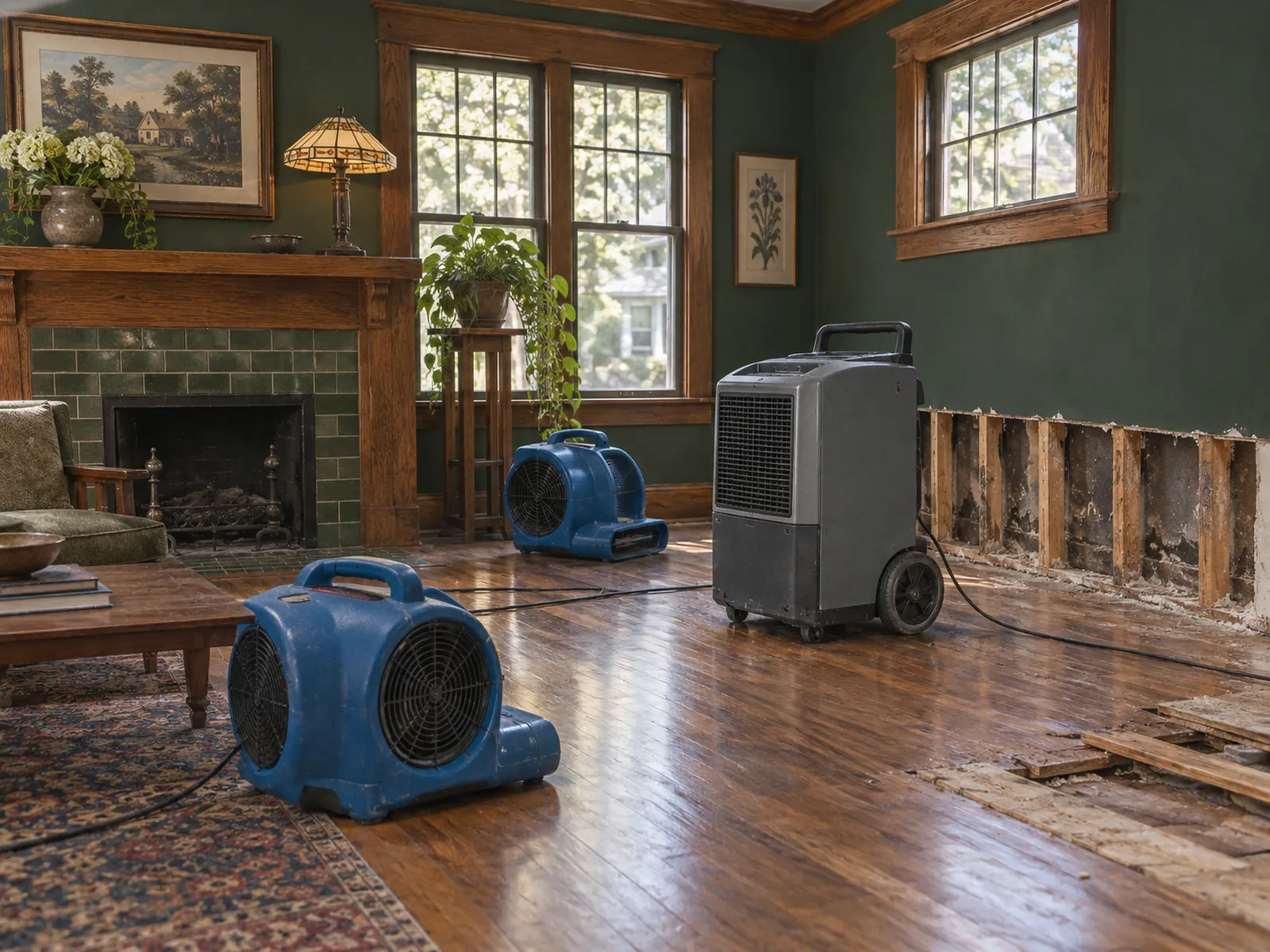
How is flood damage different from a pipe leak?
Rising water from rivers or streams is Category 3 water in the IICRC's definitions, meaning grossly contaminated (IICRC). That means contamination controls, cleaning before drying and more material removal than a clean-water leak. Rain coming through a roof is not automatically Category 3 (IICRC).
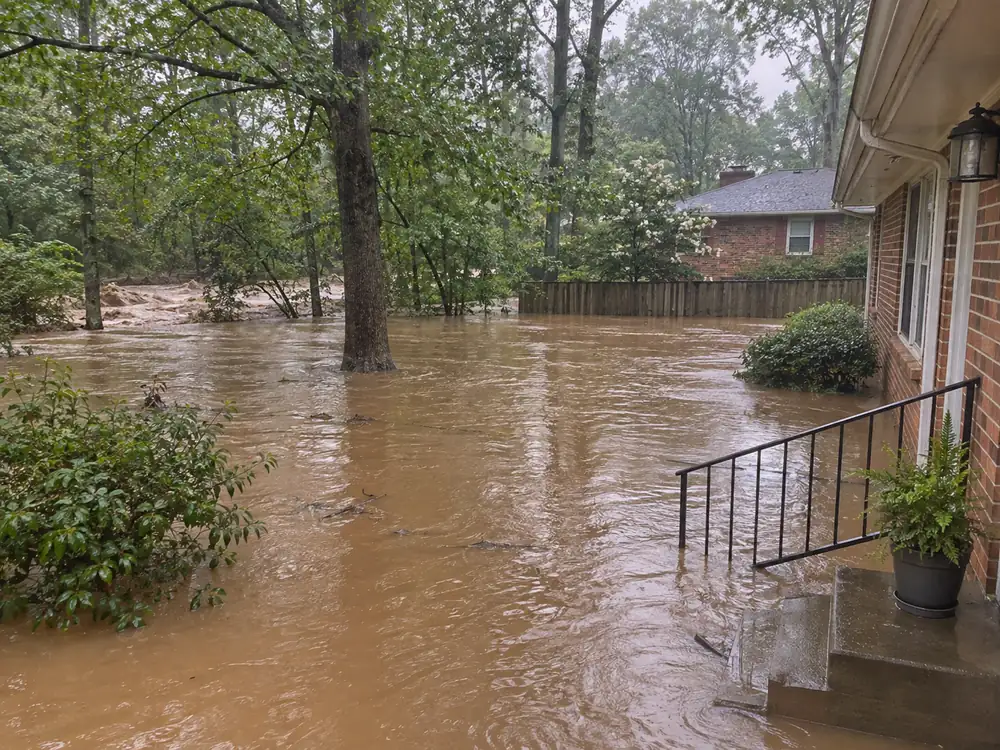
Does homeowners insurance cover flood damage?
Usually not. Most homeowners and renters insurance policies do not cover flood damage, which is covered by a separate flood policy (FloodSmart). National Flood Insurance Program policies generally take 30 days to take effect after purchase, with some exceptions (FloodSmart).
NFIP residential coverage goes up to $250,000 for the building and $100,000 for contents (FEMA).
What should I do after the water goes down?
Photograph the water line and every damaged room, get standing water and mud out, remove soaked porous materials, and start drying. Because floodwater is contaminated, cleaning and disinfecting come before drying.
- Photograph the high-water mark on walls, inside and out.
- Keep samples of carpet and flooring for the adjuster if you can.
- Remove soaked carpet, pad, insulation and the lower part of drywall.
- Clean and disinfect hard surfaces before drying begins.
Has Atlanta flooded like this before?
Yes. In September 2009, 18 streamgages in metro Atlanta exceeded the 0.2 percent, or 500-year, flood level. The floodwaters affected 16,981 homes and 3,482 businesses (USGS). In September 2024, Helene gave Atlanta its highest 48-hour rainfall on record, 11.12 inches (Georgia 2024 climate summary).
- In 2009 the Chattahoochee River at Vinings reached its highest level in 81 years (USGS).
- At the Peachtree Creek gage, backwater from the Chattahoochee pushed levels past the 500-year mark (USGS).
- Atlanta set a daily rainfall record of 7.62 inches on September 27, 2024 (NWS Peachtree City).
How do I find out if my home is in a flood zone?
Search your address on FEMA's Flood Map Service Center, which has the official flood maps (FEMA). The map is a starting point, not a guarantee. Streets near creeks, low spots and homes with basements below grade can take on water during heavy rain even outside a mapped zone.
What has to be thrown out after a flood?
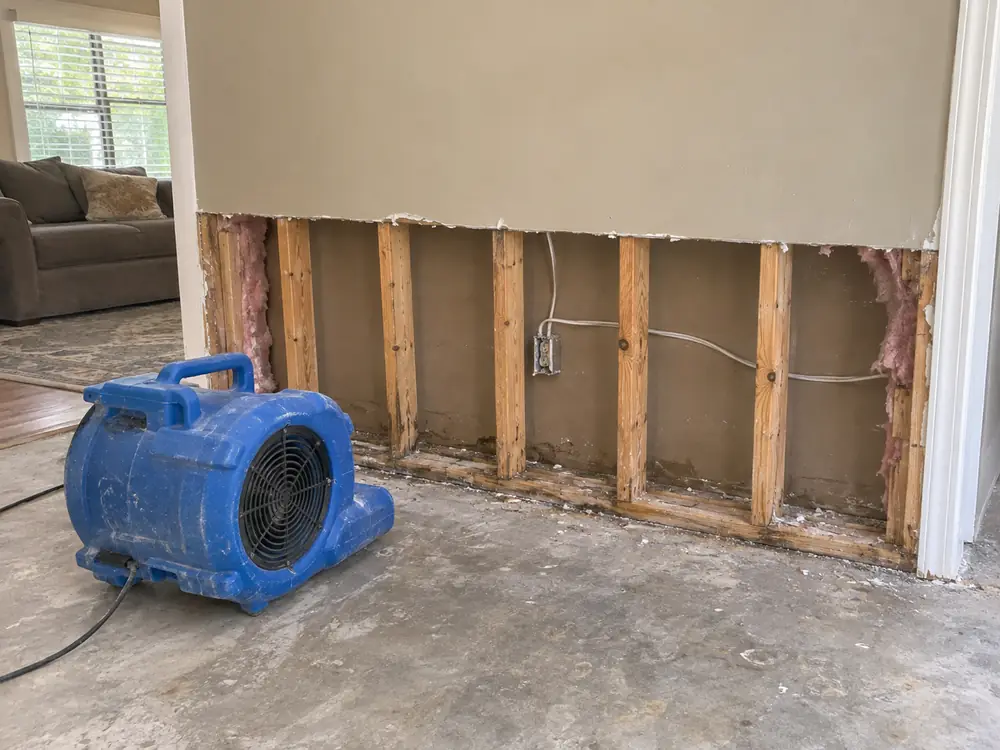
FEMA says to remove drywall and insulation that came in contact with floodwater (FEMA). Soaked carpet and pad, mattresses, upholstered furniture and other porous items touched by floodwater are usually discarded because they cannot be fully cleaned. Photograph everything first and keep a list for the adjuster.
How do I clean up floodwater safely?
Wear rubber boots, waterproof gloves and eye protection, and keep children and pets out of the area. Never run a gasoline pump, generator or pressure washer inside or less than 20 feet from a door, window or vent, because of carbon monoxide (CDC). Have an electrician check anything electrical that got wet.
How do I start a flood insurance claim?
Report the flood and your loss to your insurance provider as soon as possible, and an adjuster will be assigned to inspect the property. Before the adjuster arrives, photograph and video the damage, write down the make, model and serial number of damaged appliances, and keep samples of carpet, flooring and curtains (FloodSmart).
- Document the damage as soon as it is safe after the water goes down (FloodSmart).
- Ask to see identification from officials and groups who come to your home (FloodSmart).
- After documenting, throw away items that pose a health risk, such as perishable food, and work to prevent mold growth (FloodSmart).
For Atlanta costs for Category 3 water and basements, see what flood cleanup costs in Atlanta.
What does a flood restoration job look like from start to finish?
Flood jobs run in a set order: a safety check, documentation, getting water and mud out, removing soaked porous materials, cleaning and disinfecting, drying with daily readings, a check for mold, and then the rebuild. Cleaning comes before drying because floodwater is contaminated.
- Safety checkPower, gas and structure are checked before anyone works inside.
- DocumentationPhotos, video, the high-water mark and samples for the adjuster.
- Water and mud outPumps, extractors and shovels for the silt that floodwater leaves behind.
- Muck-outSoaked drywall, insulation, carpet, pad and other porous materials come out.
- Clean and disinfectHard surfaces and framing are cleaned before drying starts.
- Dry and verifyAir movers and dehumidifiers run until readings match dry areas of the house.
- RebuildDrywall, insulation, flooring and trim go back in, often under a separate estimate.
For the drying stage in more detail, see water mitigation and structural drying.
What should I ask a flood restoration company?
- Will you give me daily moisture readings in writing?
- What are you removing, and why can it not be dried in place?
- Do you bill my insurer directly, or do I pay and get reimbursed?
- Is the rebuild included, or is that a separate estimate?
- Can I see your Georgia contractor license and certificate of insurance?
Common questions
Is storm water through the roof a flood?
Not for restoration purposes. The IICRC says water from top-down entry, such as wind-driven rain, is not automatically Category 3 (IICRC). Insurance definitions are separate, so check your policy.
Can I buy flood insurance after a storm is forecast?
You can buy it, but NFIP policies generally have a 30-day waiting period before coverage starts (FloodSmart).
Can flooded drywall be saved?
Drywall soaked by floodwater is usually cut out and replaced because it is contaminated, not just wet.
How do I look up my flood zone?
Enter your address on FEMA's Flood Map Service Center (FEMA).
Related guides
Sources
- IICRC: Category of water damage position statement
- FloodSmart: buy a policy
- FEMA: flood insurance
- USGS: September 2009 floods in the Atlanta area
- USGS: the epic September 2009 flooding in Georgia
- Georgia 2024 climate summary
- NWS Peachtree City: September 2024 climate summary
- FEMA: Flood Map Service Center
- FEMA: don't wait to clean or make repairs
- CDC: reentering your flooded home
- FloodSmart: how to start your flood insurance claim
Last reviewed November 13, 2026. This guide is general information, not legal, insurance or medical advice.