What should I do first when the basement floods?
Stay out of the water if it is near outlets, cords, the electrical panel or appliances, and leave the power to the utility or an electrician. Then stop the source if you can, photograph everything and call for help with extraction and drying.
- Shut off the main water valve if a pipe, water heater or appliance line is leaking.
- Photograph and video the water level, the walls and anything stored on the floor.
- Move items that are dry to a higher floor.
- Call your insurer to open a claim.
Does it matter where the basement water came from?
Yes. A burst supply line is usually Category 1, clean water. A sump pump failure is typically Category 2 (Massachusetts DPH). Surface water flowing in from outside and rising water from creeks are Category 3, grossly contaminated (Massachusetts DPH), which means more material comes out.
What does a professional basement cleanup involve?
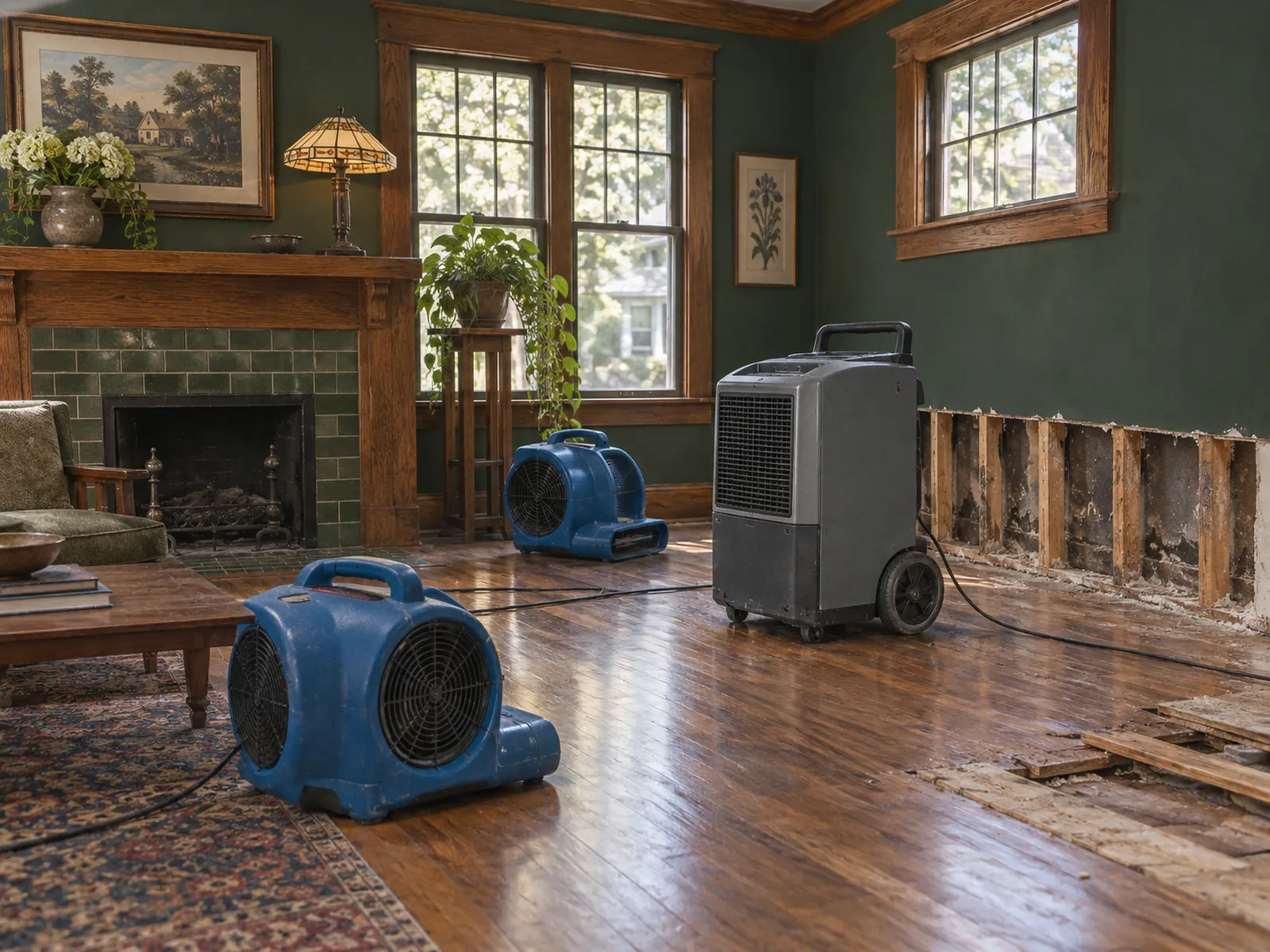
Pumping out standing water, extracting carpet and pad, removing soaked drywall and insulation, cleaning and disinfecting if the water was contaminated, and drying with dehumidifiers and air movers until moisture readings are normal.
Finished basements take longer
Carpet over concrete, framed walls with insulation and built-in cabinets all hold water. Expect more removal and a longer drying time than an unfinished basement.
How quickly does a flooded basement need to be dried?
As soon as possible. The EPA says to dry water-damaged areas and items within 24 to 48 hours to prevent mold growth (EPA). Basements are often cooler and more humid than the rest of the house, so a dehumidifier is usually needed.
Is a flooded basement covered by insurance?
It depends on the source. Most homeowners and renters policies do not cover flood damage, which needs a separate flood policy (FloodSmart). Check your own policy for how it treats other sources, such as a burst pipe or sump pump failure.
What should I ask a basement cleanup company?
- Will you give me daily moisture readings in writing?
- What are you removing, and why can it not be dried in place?
- Do you bill my insurer directly, or do I pay and get reimbursed?
- Is the rebuild included, or is that a separate estimate?
- Can I see your Georgia contractor license and certificate of insurance?
Common questions
Can I pump out the basement myself?
For a small amount of clean water, a wet/dry vacuum or a rented pump can help. Stay out of water that is near electricity, and leave contaminated water to a professional.
Can basement carpet be saved?
Carpet soaked with clean water can sometimes be dried, but the pad usually cannot. Carpet soaked by floodwater or sewage is usually removed.
Why does my basement smell musty after it dried?
A musty smell can mean materials are still damp or mold has started. Have the area checked with a moisture meter.
Related guides
Sources
- Massachusetts DPH: water damage quick reference
- EPA: A Brief Guide to Mold, Moisture and Your Home
- FloodSmart: buy a policy
Last reviewed November 13, 2026. This guide is general information, not legal, insurance or medical advice.