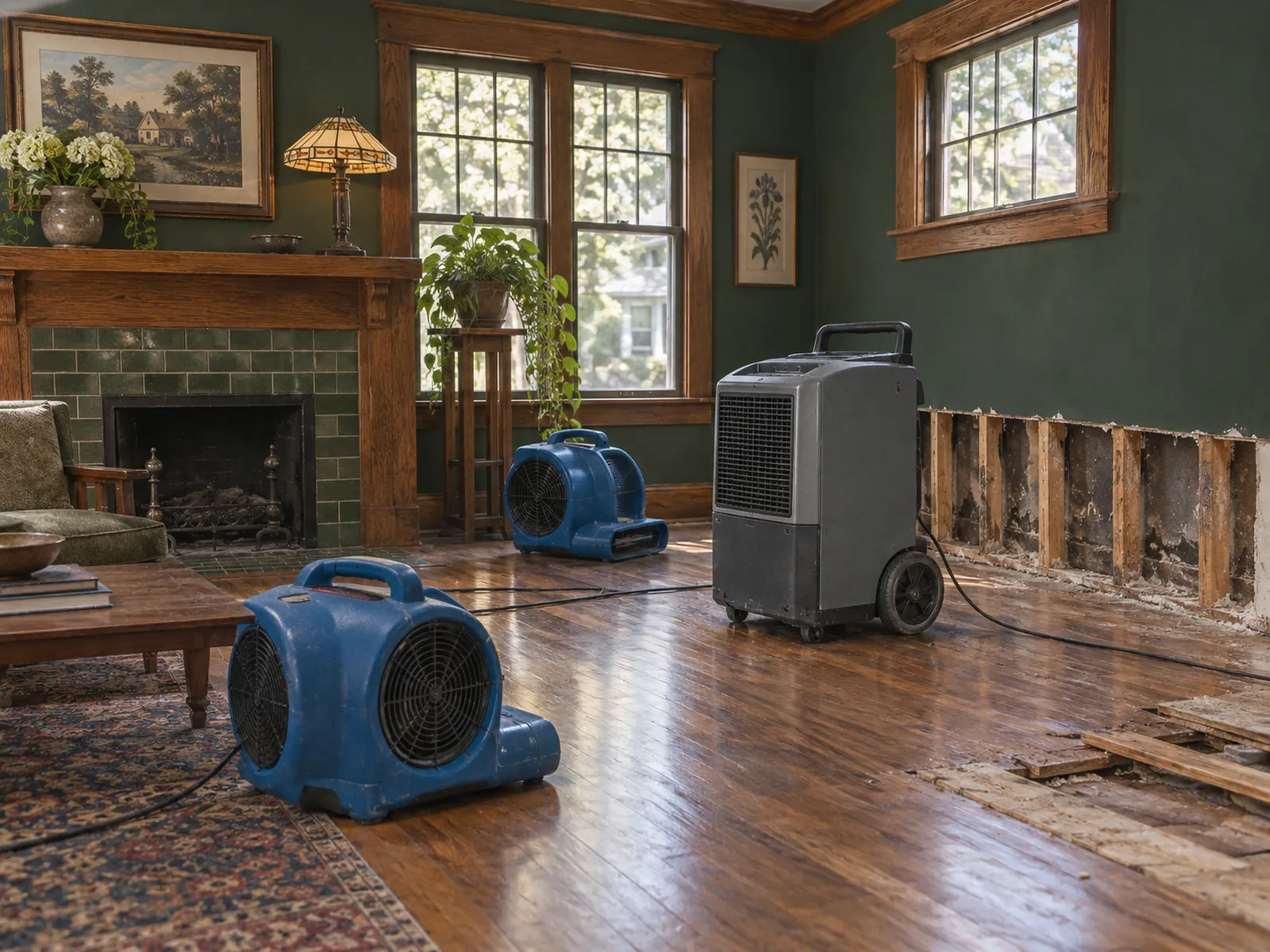
What should I do first when water is coming in?
Stop the water, stay clear of electricity, document the damage, then start getting water out. In that order. Shutting off the main valve is usually the single most useful thing you can do in the first few minutes.
- Stop the waterClose the main shutoff valve, often where the water line enters the house, in the basement, crawl space or near the water heater. For a water heater, close the cold supply valve on top.
- Stay clear of electricityIf water is near outlets, cords or the panel, stay out of the room. Leave the power to the utility or an electrician.
- Photograph everythingTake photos and video of each room before anything is moved or thrown out.
- Call for helpCall a water damage company to start extraction and drying, and call your insurer to open a claim.
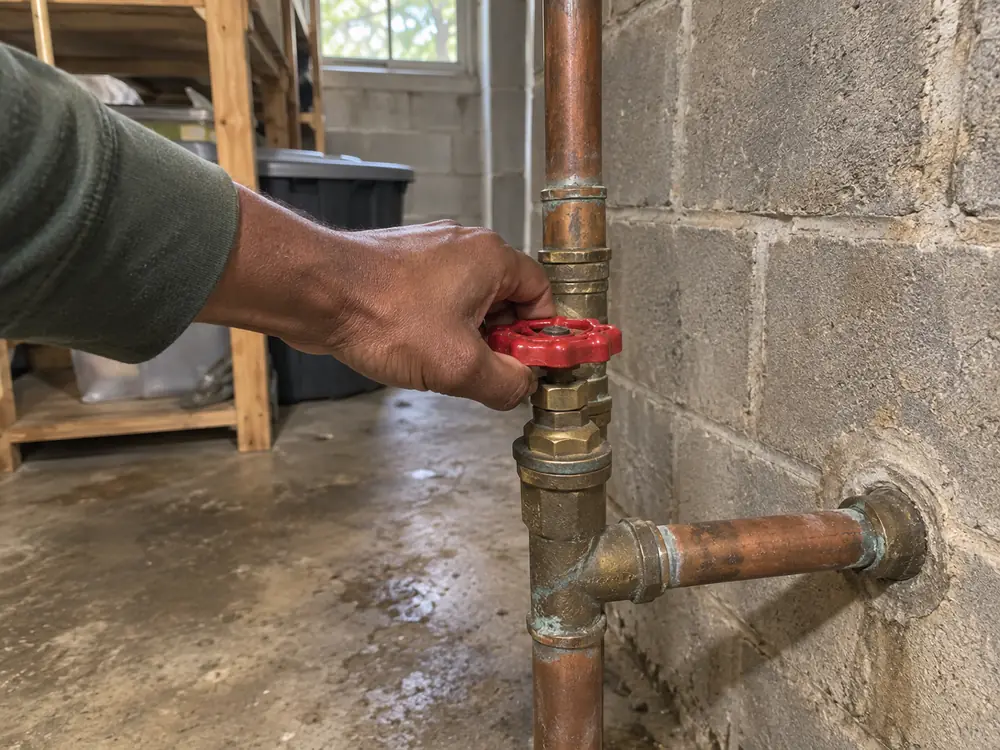
Not sure where the valve is? See where to find your emergency water shut-off valve.
Who do I call for a water main break or sewer backup in Atlanta?
If the problem is on the utility's side, such as a main break in the street or a sewer backing up from the public line, call your water utility first. Inside the City of Atlanta and DeKalb County, these lines answer 24 hours a day.
- City of Atlanta water main break or leak: 404-546-0311, or 311 inside the city, 24 hours a day (ATL311).
- DeKalb County water or sewer emergency: 770-270-6243, 24 hours (DeKalb Watershed Management).
- Your homeowners insurer: the claims number is usually on your policy declarations page or in the insurer's app.
Why does the first 48 hours matter?
Mold can start growing on wet materials quickly. The EPA says to dry water-damaged areas and items within 24 to 48 hours to prevent mold growth (EPA). Water removal and drying are emergency work for that reason. The rebuild can wait.
What should I do if a pipe freezes or bursts?
If a pipe has burst, close the main shutoff first. If a pipe is frozen, keep the faucet open and warm the pipe with an electric heating pad, a hair dryer or a space heater kept away from anything flammable. The Red Cross says never to use a blowtorch or other open flame (American Red Cross).
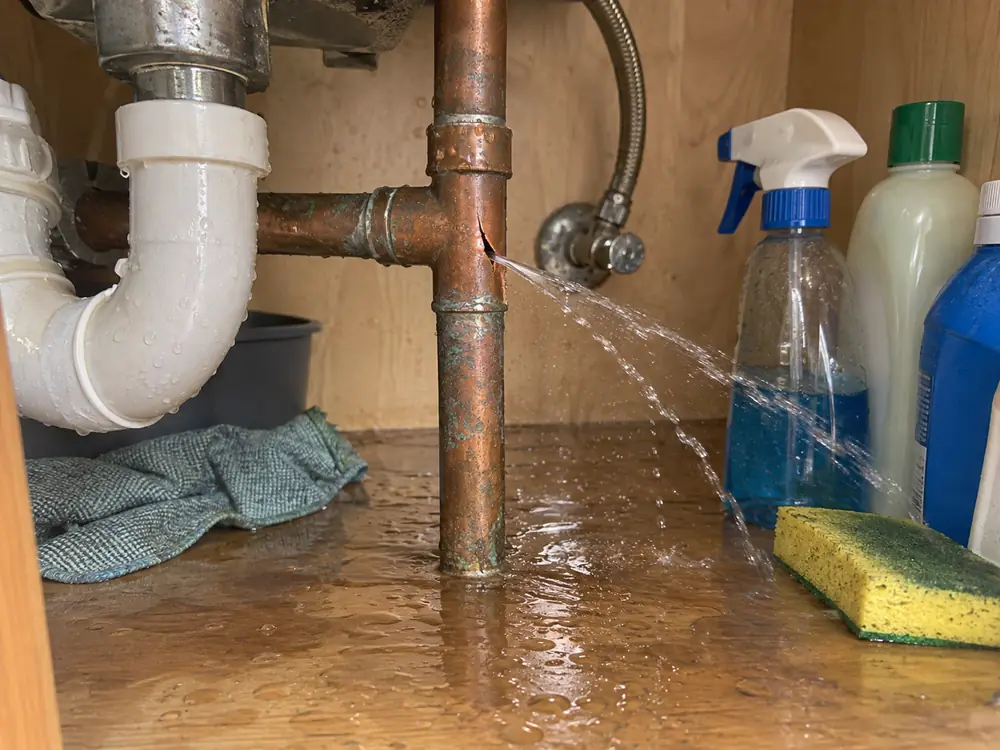
Atlanta does get hard freezes. The official low reached 8°F on December 24, 2022 (NWS Peachtree City). The Red Cross suggests these steps before a cold snap (American Red Cross):
- Disconnect and drain garden hoses, and close the inside valves to outdoor spigots.
- Open kitchen and bathroom cabinet doors so warm air reaches the pipes.
- Let cold water drip from faucets served by exposed pipes.
- Keep the thermostat at the same temperature day and night.
- If you are away, leave the heat on no lower than 55°F.
If you cannot find or reach the frozen section, or it will not thaw, the Red Cross says to call a licensed plumber (American Red Cross).
What should I check when city water comes back?
When water service returns after a main break, check under sinks, behind toilets, around the water heater and washing machine, and at the meter for new leaks. Follow any boil water advisory until the utility lifts it. In June 2024, main breaks in Atlanta led to a boil water advisory for parts of the city (City of Atlanta).
When is it not safe to go back in?
Stay out if ceilings or floors are sagging, if you smell gas, or if water is near outlets, cords or the electrical panel. FEMA says to check ceilings and floors for sagging and not to use gas appliances until they have been inspected (FEMA). Wet electrical items should be checked by an electrician (CDC).
What should I photograph for insurance?
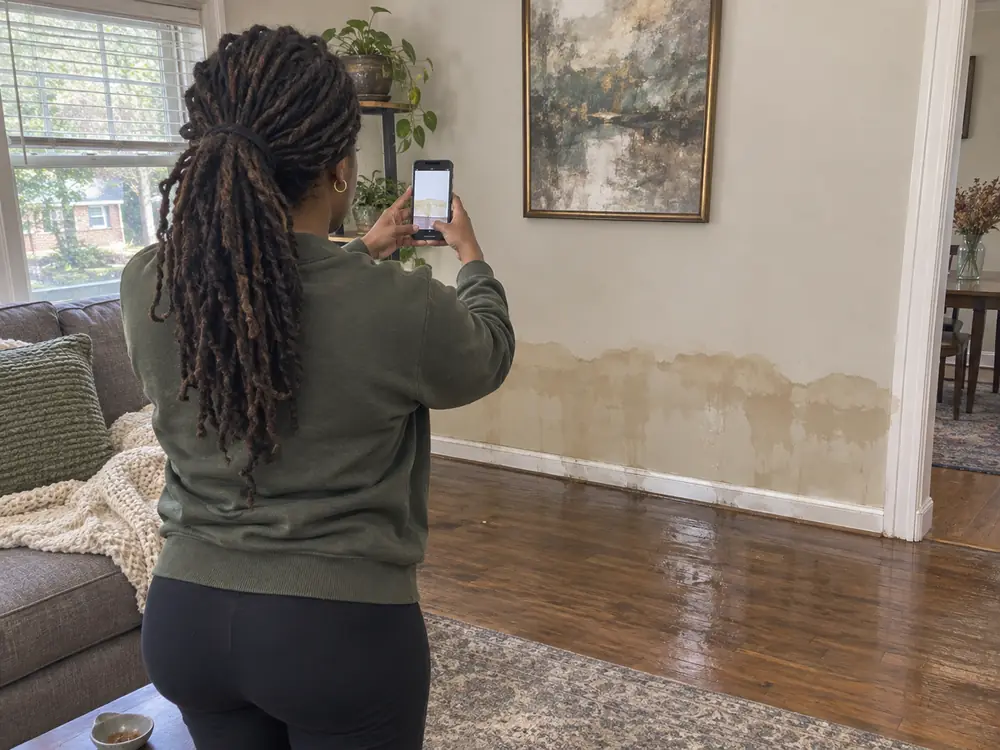
Photograph and video the damage inside and outside the house before anything is moved or thrown out. FEMA recommends labeling the photos by room (FEMA). Get the water line on the walls, damaged items, the source of the leak and the model and serial numbers of damaged appliances.
What should I do if the water heater is leaking?
Close the cold water supply valve on top of the tank, then shut off its energy source: the breaker for an electric heater, or the gas control set to off for a gas heater. If water is pooling near the heater's wiring or gas line, stay back and call a plumber.
- Put towels or a pan under slow drips and move boxes and rugs away from the tank.
- Do not try to drain a tank full of very hot water yourself.
- Photograph the tank's label, which shows the model and serial number.
Will homeowners insurance cover a burst pipe?
Usually, if it was sudden. The Insurance Information Institute says the common HO-3 homeowners policy covers accidental discharge of water from a plumbing system, such as a burst pipe. Water seeping into a basement from the ground is excluded and is treated as a maintenance issue (Insurance Information Institute).
Check your own policy's declarations and exclusions, and call the claims line early.
For typical Atlanta repair costs, see Atlanta water damage costs.
What should I not do?
Do not walk into standing water near electricity, do not throw out damaged items before they are photographed, and do not run a household vacuum on wet carpet. Avoid closing up walls or laying new flooring until moisture readings confirm the area is dry.
Common questions
Where is my main water shutoff?
In many Atlanta homes it is in the basement or crawl space where the water line comes in, near the water heater, or in a box near the street by the meter. See our shut-off valve guide.
How warm should I keep the house when I travel in winter?
The Red Cross says to leave the heat on, set no lower than 55°F (American Red Cross).
Related guides
Sources
- ATL311: water main breaks and leaks
- Atlanta Department of Watershed Management: report a problem
- DeKalb County Watershed Management
- EPA: A Brief Guide to Mold, Moisture and Your Home
- American Red Cross: preventing and thawing frozen pipes
- NWS Peachtree City: December 2022 climate summary
- City of Atlanta: water system update, June 4, 2024
- FEMA: don't wait to clean or make repairs
- CDC: reentering your flooded home
- Insurance Information Institute: am I covered?
Last reviewed November 13, 2026. This guide is general information, not legal, insurance or medical advice.