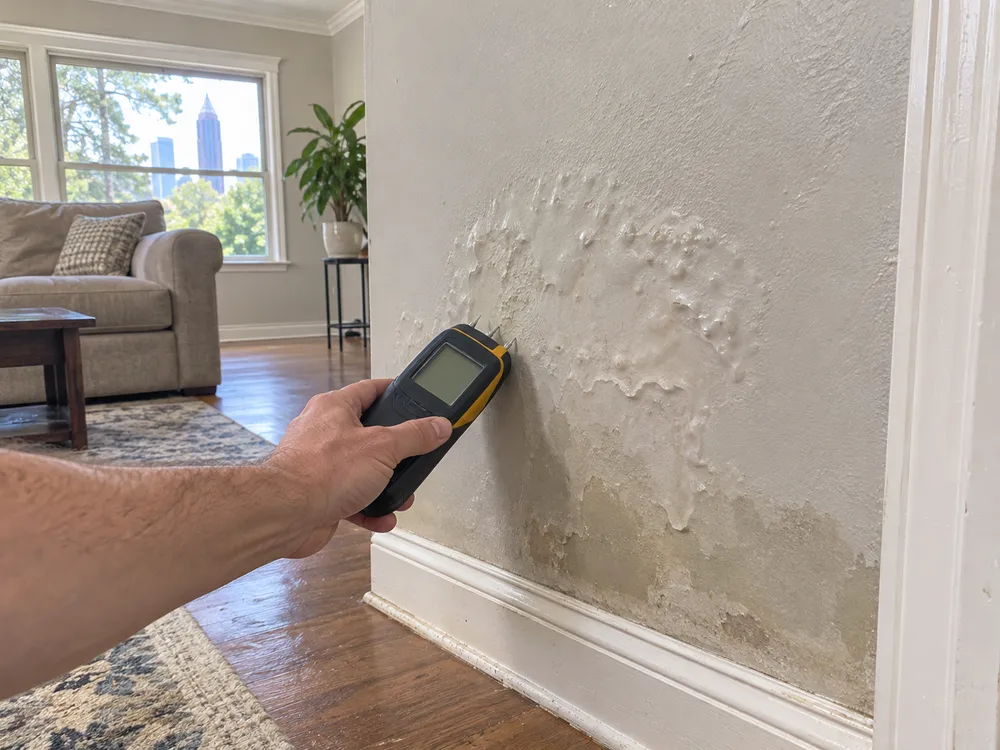
What are the signs of a leak behind a wall?
- Stains or discoloration that grow.
- Paint or wallpaper that bubbles or peels.
- Drywall that feels soft or crumbles at the base.
- Warped baseboards or flooring along the wall.
- A musty smell with no visible source.
The EPA lists the inside of walls around leaking or condensing pipes, and the back side of drywall, as common hidden mold spots (EPA).
How can I check without opening the wall?
Use the water meter. EPA WaterSense suggests reading the meter before and after a two-hour period when no water is being used; if it changes, you probably have a leak (EPA WaterSense). A moisture meter or thermal camera can narrow down where.
What should I do before opening the wall?
Photograph the wall and take readings. Turn off the water to that area if you can. Be careful removing wallpaper over a suspected mold area, because the EPA warns it can release a massive amount of spores (EPA).
Is a hidden leak covered?
Washington's insurance commissioner says sudden leaks are often covered, while damage that develops over more than a couple of days usually is not (Washington OIC). That is why records of when you found it matter.
Common questions
Can a leak behind the wall cause mold?
Yes. Hidden leaks often go on for weeks, which gives mold time to grow on the back of the drywall.
How big is a typical hidden leak?
EPA WaterSense says nine percent of homes have leaks that waste 50 gallons or more per day.
Who finds hidden leaks?
A plumber with leak detection tools, or a restoration company with moisture meters and thermal cameras.
Related guides
Sources
- EPA: A Brief Guide to Mold, Moisture and Your Home
- EPA WaterSense: Fix a Leak Week
- Washington Office of the Insurance Commissioner: leaks, water damage and mold
Last reviewed November 13, 2026. This guide is general information, not legal, insurance or medical advice.