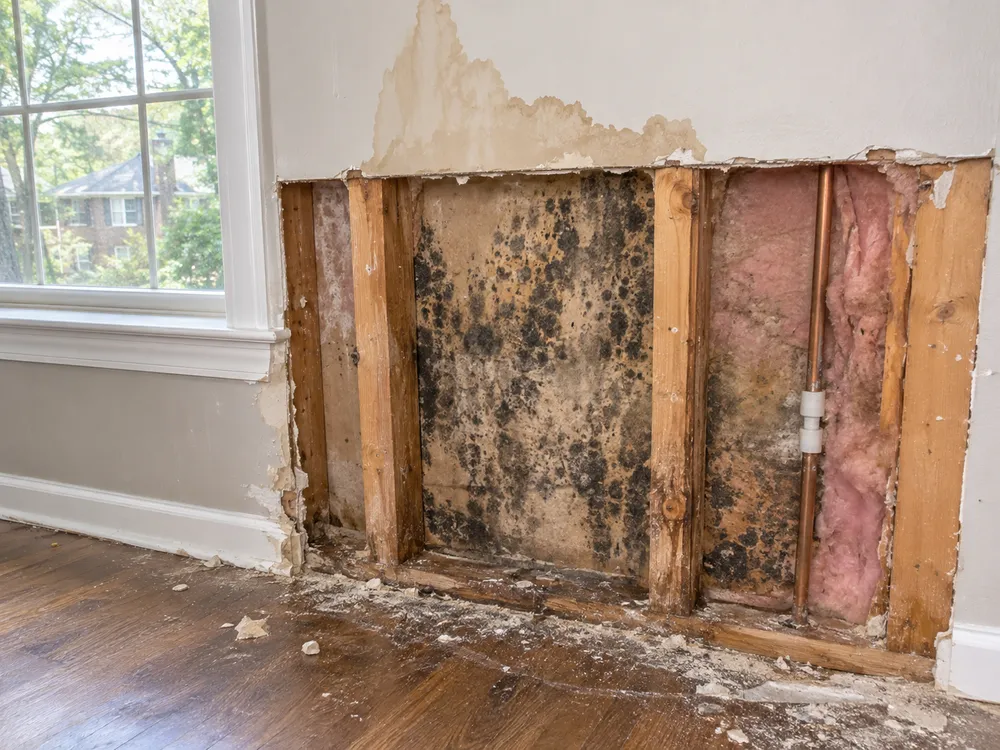
What are the signs of mold behind drywall?
- A musty smell in one room or along one wall.
- Stains, discoloration or bubbling paint.
- A past leak, flood or condensation problem in that area.
- Allergy-type symptoms that improve when you are away from home.
The EPA lists the back side of drywall, wallpaper and paneling, and the inside of walls around leaking or condensing pipes, as places mold hides (EPA).
Should I cut the wall open to check?
Carefully, or not at all. The EPA warns that removing wallpaper over hidden mold can release a massive amount of spores, and suggests considering a professional when you suspect hidden mold (EPA).
How much drywall comes out?
Massachusetts DPH says to remove moldy drywall plus at least one foot beyond the point of saturation, and to discard wet insulation in the cavity (Massachusetts DPH). The EPA uses containment for areas over 10 square feet (EPA).
Do I need a mold test?
Not if mold is visible. The EPA says sampling is usually unnecessary when you can see the mold (EPA). Testing can help when there is a smell but no visible growth.
Common questions
Can mold behind drywall make me sick?
Mold can cause allergic reactions and asthma symptoms in some people. Talk to a doctor about symptoms.
Can I spray mold killer into the wall?
Spraying does not remove mold. Moldy drywall is removed and the cavity cleaned and dried.
What causes mold behind walls?
Leaks from plumbing, windows or roofs, or condensation. Fix the source first.
Related guides
Sources
- EPA: A Brief Guide to Mold, Moisture and Your Home
- Massachusetts DPH: quick reference, water damage response in buildings
- EPA: Mold Remediation in Schools and Commercial Buildings, Chapter 3
Last reviewed November 13, 2026. This guide is general information, not legal, insurance or medical advice.