How long does wet drywall take to dry?
It depends on how wet it got, what is behind it and how much airflow and dehumidification it gets. The deadline that matters is mold: The EPA says to dry water-damaged areas and items within 24 to 48 hours to prevent mold growth (EPA). Massachusetts DPH says to cut out and discard drywall that has not been dried enough within 48 hours (Massachusetts DPH).
Read the video transcript
How long does wet drywall take to dry? There is no set number of days. Here is what matters. The clock that matters is mold. The EPA says to dry water-damaged areas and items within twenty-four to forty-eight hours to prevent mold growth. Massachusetts public health guidance says to cut out and discard drywall that has not been dried enough within forty-eight hours. The EPA says drywall may be dried in place if there is no obvious swelling and the seams are intact. If not, remove, discard, and replace it. Where mold shows, Massachusetts guidance says to remove the drywall plus at least one foot beyond the saturation point, and discard wet insulation behind it. The full guide, with sources, is at 404waterdamage.com.
When can drywall be dried in place?
The EPA says drywall may be dried in place if there is no obvious swelling and the seams are intact, and that the wall cavity should be ventilated if possible. If not, remove, discard and replace it (EPA).
When does drywall have to be cut out?
When it swelled, the seams opened, it stayed wet too long, or it was soaked by contaminated water. Massachusetts DPH says to remove drywall showing mold plus at least one foot beyond the saturation point, and to discard wet insulation in the cavity (Massachusetts DPH).
How do I know the wall is really dry?
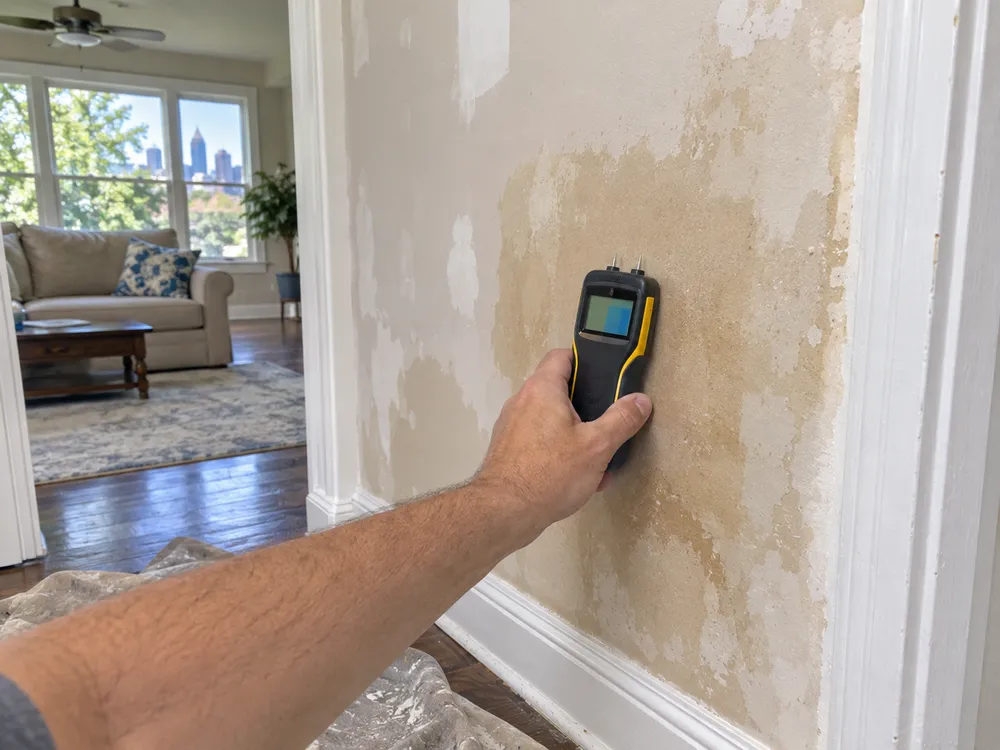
By readings. Crews take moisture readings on a dry wall as a baseline, then keep drying until the wet wall matches. Ask for a drying log with readings for each visit before anyone paints or closes up a wall.
Common questions
Can I paint over drywall once it feels dry?
Not until a moisture meter shows it matches a dry wall. Drywall can feel dry on the surface while the back side and the cavity are still wet.
Does wet drywall always grow mold?
Not always. The EPA notes that mold will not always grow after 48 hours, and that it can grow even if materials dry within 48 hours.
Why do crews cut drywall a foot or two up the wall?
So the wet section and the cavity behind it can dry, and so anything that wicked water is removed.
Related guides
Sources
- EPA: Mold Remediation in Schools and Commercial Buildings, Table 1
- Massachusetts DPH: quick reference, water damage response in buildings
- EPA: A Brief Guide to Mold, Moisture and Your Home
Last reviewed November 13, 2026. This guide is general information, not legal, insurance or medical advice.