What does water damage restoration include?
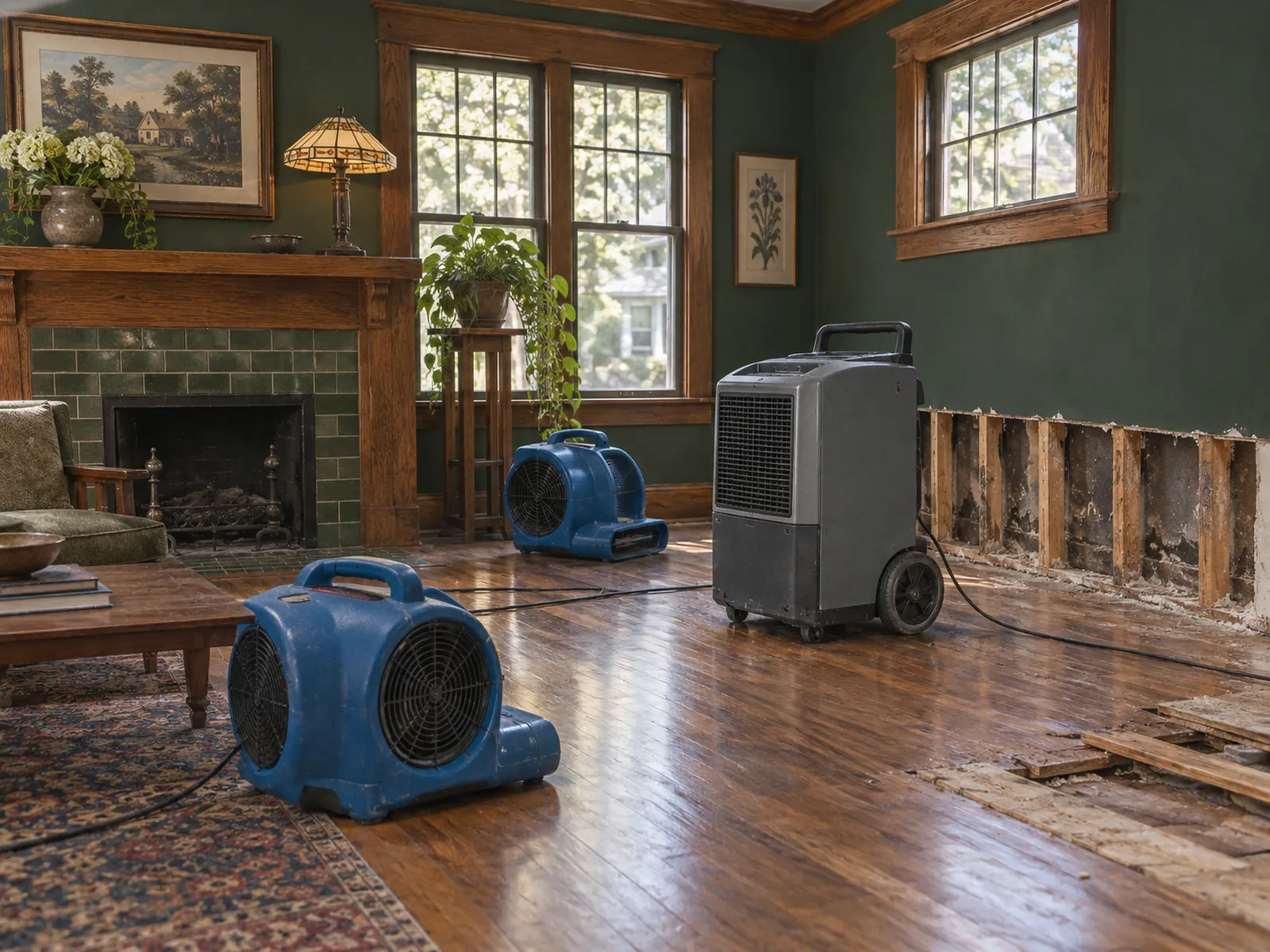
Water damage restoration covers three stages: water removal, mitigation (drying and removing materials that cannot be saved) and reconstruction. Some companies do all three. Others only handle removal and drying, and a separate contractor does the rebuild. Ask which stages are in the estimate before work starts.
| Water removal | Mitigation | Restoration | |
|---|---|---|---|
| Goal | Get standing water out | Stop the damage from spreading | Rebuild what was removed |
| When | First hours | Usually the first several days | After the structure is dry |
| Equipment | Pumps, extractors | Moisture meters, air movers, dehumidifiers | Drywall, flooring, paint |
What order does the work happen in?
The source of the water is stopped first, then standing water is extracted, wet materials are removed, and the structure is dried until moisture readings match dry areas of the house. Rebuilding starts only after the drying is confirmed.
- Stop the sourceThe ANSI/IICRC S500 water damage standard treats fixing the source as the property owner's responsibility, so you may need a plumber or roofer as well (IICRC).
- Extract the waterPumps for standing water, then truck-mounted or portable extractors for carpet and pad.
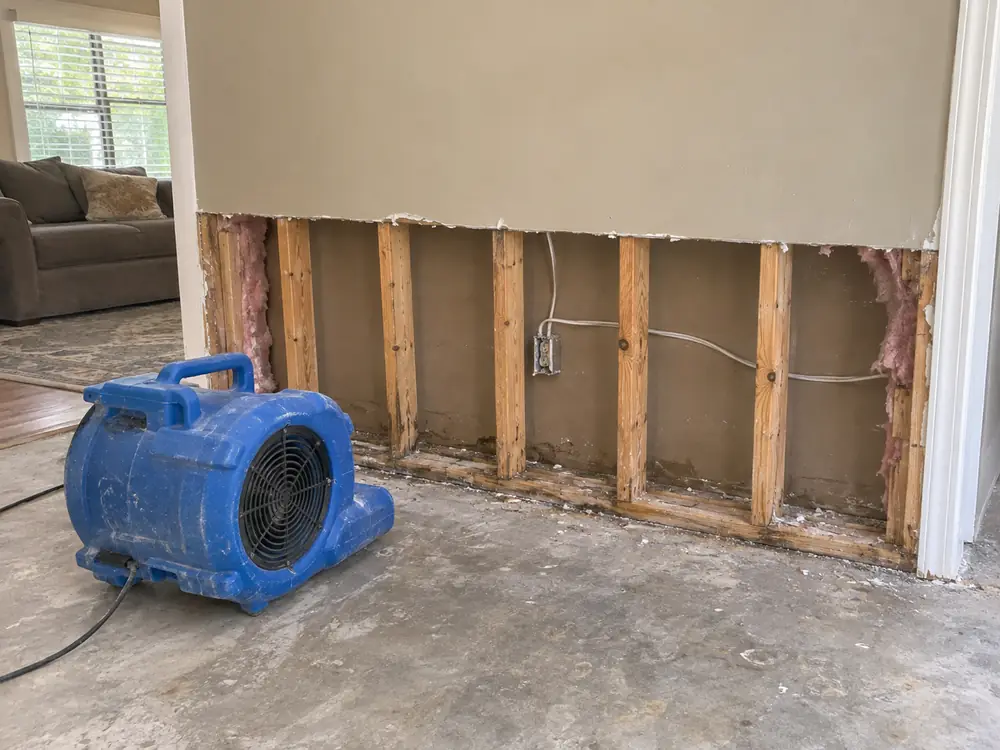
- Remove and dryWet pad, baseboards and the lower part of soaked drywall usually come out. Air movers and dehumidifiers run until readings are normal.
- RebuildDrywall, trim, paint and flooring are replaced. This is often a separate estimate.
How quickly should restoration start?
Drying should start as soon as possible. The EPA says to dry water-damaged areas and items within 24 to 48 hours to prevent mold growth (EPA). That window is why water removal and drying are usually treated as emergency work, while the rebuild can wait.
Does the type of water change the job?
Restoration crews sort water into three categories based on how contaminated it is. Category 1 is clean water, Category 2 carries significant contamination, and Category 3 is grossly contaminated, such as sewage or rising water from a creek. The category decides what can be dried and what has to come out.
- Category 1: clean water from a sanitary source, such as a burst supply line, a water heater or rain through the roof (Massachusetts DPH quick reference).
- Category 2: often called gray water, such as a dishwasher or washing machine overflow, or a sump pump failure (Massachusetts DPH).
- Category 3: grossly contaminated water, including sewage, waste line backflow from beyond a trap and rising water from rivers or streams (IICRC).
Time and temperature can change the category, so clean water that sits can get worse (IICRC).
What should a Georgia restoration contractor have?
In Georgia, residential work over $2,500 generally requires a contractor licensed by the State Licensing Board for Residential and General Contractors (Georgia Secretary of State). Plumbing, electrical and HVAC work must be done by trades licensed for that work (Georgia Secretary of State).
You can look up a license on the Secretary of State's site and ask for a certificate of insurance before work begins (Georgia contractor FAQ).
How much does water damage restoration cost in Atlanta?
Angi's survey of its Atlanta customers puts the average water damage repair job at $8,546, with most jobs between $1,874 and $15,960, or about $6.66 to $16.65 per square foot (Angi). The type of water, the size of the wet area and how much has to be rebuilt move the price the most.
See Atlanta water damage costs for costs by service, by type of water and by part of the house, plus how to read an estimate.
What causes water damage in Atlanta homes?
In Atlanta the usual causes are heavy rain, hard freezes that split pipes, breaks in aging water mains, and everyday leaks from appliances and air conditioning. Atlanta's normal yearly precipitation is 49.71 inches, and 2024 brought 63.18 inches, 13.47 inches above normal (NWS Peachtree City).
- Heavy rain and creek flooding: storm water through roofs, window wells and basement walls, and creeks that leave their banks. See flood damage for Atlanta's flood history.
- Freezes: Atlanta's official low reached 8°F on December 24, 2022 (NWS Peachtree City). Supply pipes in crawl spaces, attics, garages, kitchen cabinets and along poorly insulated exterior walls are among the ones that freeze most often (American Red Cross).
- Water main breaks: in early June 2024, breaks at Joseph E. Boone Blvd. and J.P. Brawley Dr. and at West Peachtree and 11th Streets led to a boil water advisory (City of Atlanta). See emergency water damage for what to check when water comes back.
- Air conditioning: clogged condensate lines and dirty drip pans overflow into ceilings and closets. The EPA says to keep drip pans clean and drain lines flowing (EPA).
- Appliances and fixtures: water heaters, washing machine hoses, dishwashers, ice maker lines and toilet supply lines.
How can I tell if water got into walls or floors?
Look for stains, peeling paint, swollen baseboards, cupped or soft flooring and a musty smell with no visible source. The EPA says a moldy smell can mean hidden mold, often on the back of drywall, under carpet pad, inside walls around leaking pipes or on top of ceiling tiles (EPA).
- Rings or brown stains on ceilings, especially under bathrooms and AC units.
- Paint that bubbles or wallpaper that lifts.
- Baseboards that swell, split or pull away from the wall.
- Hardwood that cups, with edges higher than the center of each board.
- Carpet that feels damp or smells sour days after a spill.
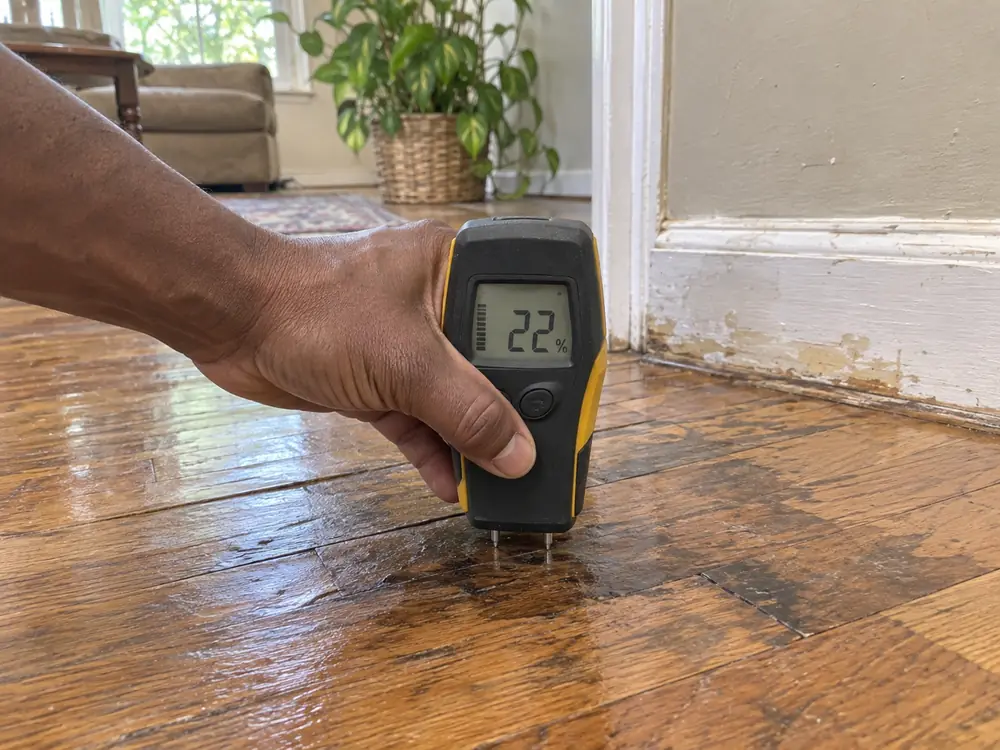
The EPA cautions that pulling off wallpaper or paneling to look behind it can release spores, and suggests an experienced professional for that kind of investigation (EPA). A moisture meter reading is a less invasive first check.
What should I ask before signing?
- Will you give me daily moisture readings in writing?
- What are you removing, and why can it not be dried in place?
- Do you bill my insurer directly, or do I pay and get reimbursed?
- Is the rebuild included, or is that a separate estimate?
- Can I see your Georgia contractor license and certificate of insurance?
Common questions
Is restoration the same as mitigation?
No. Mitigation is the drying and removal that stops the damage from spreading. Restoration also includes rebuilding what was removed.
Should I fix the leak before calling?
If you can, shut off the water. The IICRC S500 standard treats fixing the water source as the property owner's responsibility (IICRC).
Does homeowners insurance cover flood water?
Most homeowners and renters policies do not cover flood damage. Flood coverage is a separate policy (FloodSmart).
How much does water damage restoration cost in Atlanta?
Angi's survey of Atlanta customers puts the average at $8,546, with most jobs between $1,874 and $15,960 (Angi).
Related guides
Sources
- EPA: A Brief Guide to Mold, Moisture and Your Home
- IICRC: current standards
- IICRC: Category of water damage position statement
- Massachusetts DPH: water damage quick reference
- Georgia SOS: licensure comparison chart
- Georgia SOS: contractor FAQ
- FloodSmart: buy a policy
- Angi: water damage repair cost in Atlanta
- NWS Peachtree City: 2024 annual climate summary
- NWS Peachtree City: December 2022 climate summary
- American Red Cross: preventing and thawing frozen pipes
- City of Atlanta: water system update, June 4, 2024
Last reviewed November 13, 2026. This guide is general information, not legal, insurance or medical advice.