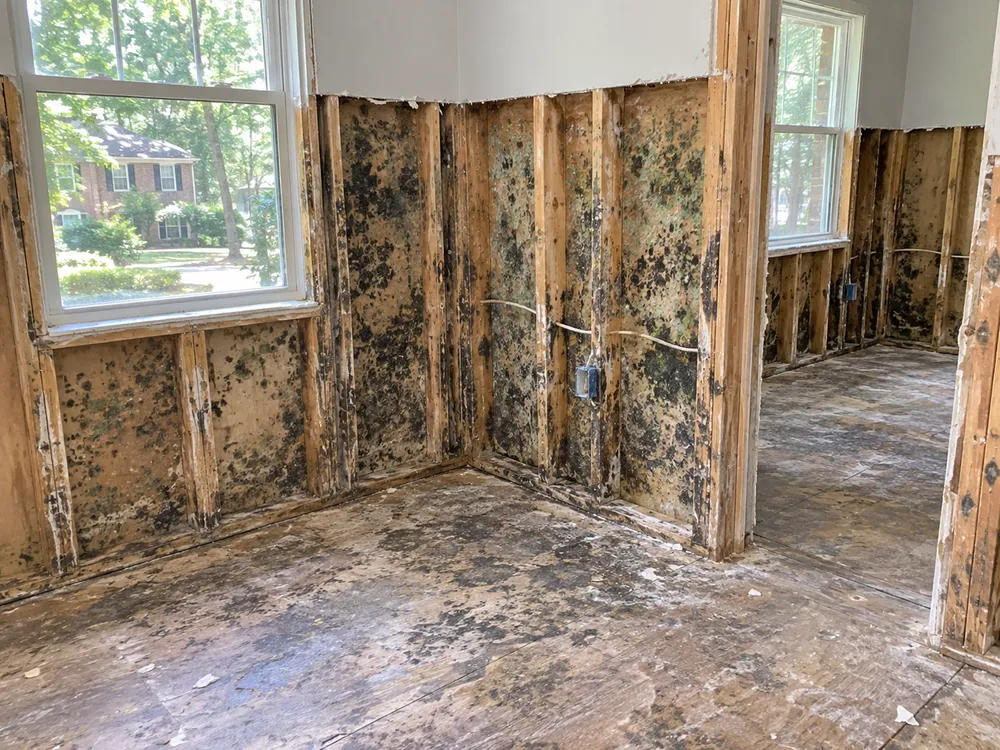
Can all moldy materials be cleaned?
No. The EPA says mold can generally be removed from nonporous surfaces by wiping or scrubbing with water and detergent, but porous materials such as ceiling tiles and insulation may have to be discarded if they become moldy (EPA).
Read the video transcript
When is mold too bad to clean? Here is what EPA guidance says about how much has to come out. The EPA says mold can generally be removed from nonporous surfaces by scrubbing with water and detergent. Porous materials, like ceiling tiles and insulation, may have to be discarded. Size matters. The EPA says you can usually handle mold under about ten square feet yourself. Its remediation guide calls for limited containment for ten to one hundred square feet, and full containment above one hundred. If mold has damaged the structural integrity of the building, the EPA says to consult a structural engineer. Is there a legal limit? No. The EPA says there are no federal limits for mold, and Georgia's health department says there are no enforceable state or federal standards. The full guide, with sources, is at 404waterdamage.com.
Does the size of the area change the job?
Yes. The EPA says you can usually handle mold under about 10 square feet yourself (EPA). For larger areas, the EPA's remediation guide calls for limited containment for 10 to 100 square feet and full containment for more than 100 square feet (EPA).
When is it a structural problem?
When mold and moisture have damaged the framing or subfloor. The EPA says a structural engineer should be consulted if mold has damaged the structural integrity of the building (EPA).
Is there a legal definition of 'too much mold'?
No. The EPA says there are no federal limits for mold or mold spores (EPA), and Georgia DPH says mold inspection, testing and remediation practices have no enforceable state or federal standards (Georgia DPH).
Common questions
Do you have to tear down a house with bad mold?
Rarely. Remediation removes and replaces damaged materials. Tearing down is about structural damage, not mold alone.
Can bleach fix a large mold problem?
No. The EPA does not recommend bleach as routine practice, and dead mold must still be removed.
Who decides what has to be removed?
The remediation company, sometimes with an independent assessor and a structural engineer if framing is damaged.
Related guides
Sources
- EPA: Mold Remediation in Schools and Commercial Buildings, Chapter 3
- EPA: A Brief Guide to Mold, Moisture and Your Home
- Georgia DPH: Indoor Air Quality
Last reviewed November 13, 2026. This guide is general information, not legal, insurance or medical advice.