Can I stay home during mold remediation?
Often, yes. The EPA says the decision to relocate occupants depends on the size of the area, the type of work, the health of the people in the building, the risk of debris and the disruption the work causes (EPA).
What does containment do?
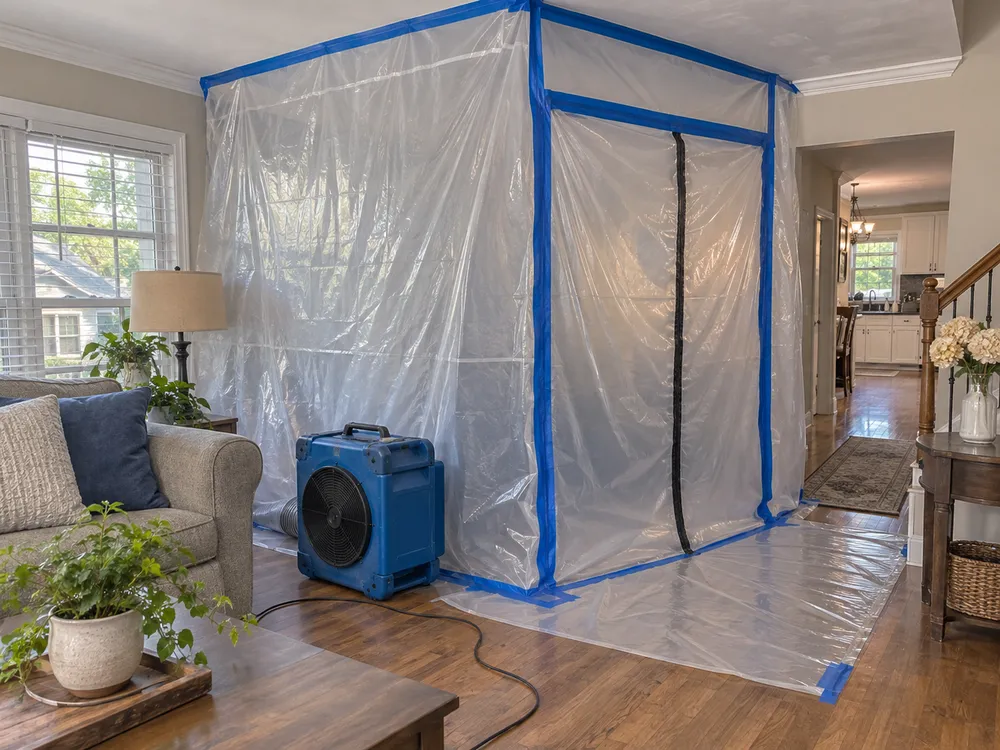
It keeps spores and dust in the work area. The EPA calls for limited containment for 10 to 100 square feet of mold and full containment for areas over 100 square feet (EPA).
Should the AC run during remediation?
Not if it may be contaminated. The EPA says not to run the HVAC system if you think it is contaminated, because it can spread mold through the building (EPA).
What should I ask the remediation company?
- Which rooms will be sealed off, and for how long?
- Will the AC be shut down or the vents sealed?
- How will debris be carried out?
- When is it safe to go back into the work area?
Common questions
Who should not stay during mold remediation?
The EPA lists health effects among the factors in relocation decisions. Ask a doctor about infants, older adults and people with lung problems.
Does insurance pay for a hotel during mold remediation?
If the mold results from a covered loss, additional living expense coverage may apply. Mold coverage is often limited.
How long does mold remediation take?
It depends on the size and the amount of material removed. Ask for a schedule in writing.
Related guides
Sources
- EPA: Mold Remediation in Schools and Commercial Buildings, Chapter 3
- EPA: A Brief Guide to Mold, Moisture and Your Home
Last reviewed November 13, 2026. This guide is general information, not legal, insurance or medical advice.