Does the EPA recommend bleach for mold?
Not as routine practice. The EPA says the use of a chemical or biocide that kills organisms such as mold, like chlorine bleach, is not recommended as a routine practice during mold cleanup (EPA).
If bleach kills it, why isn't that enough?
Because dead mold can still cause reactions. The EPA says dead mold may still cause allergic reactions in some people, so it is not enough to kill it; it must be removed (EPA).
What should I clean mold with?
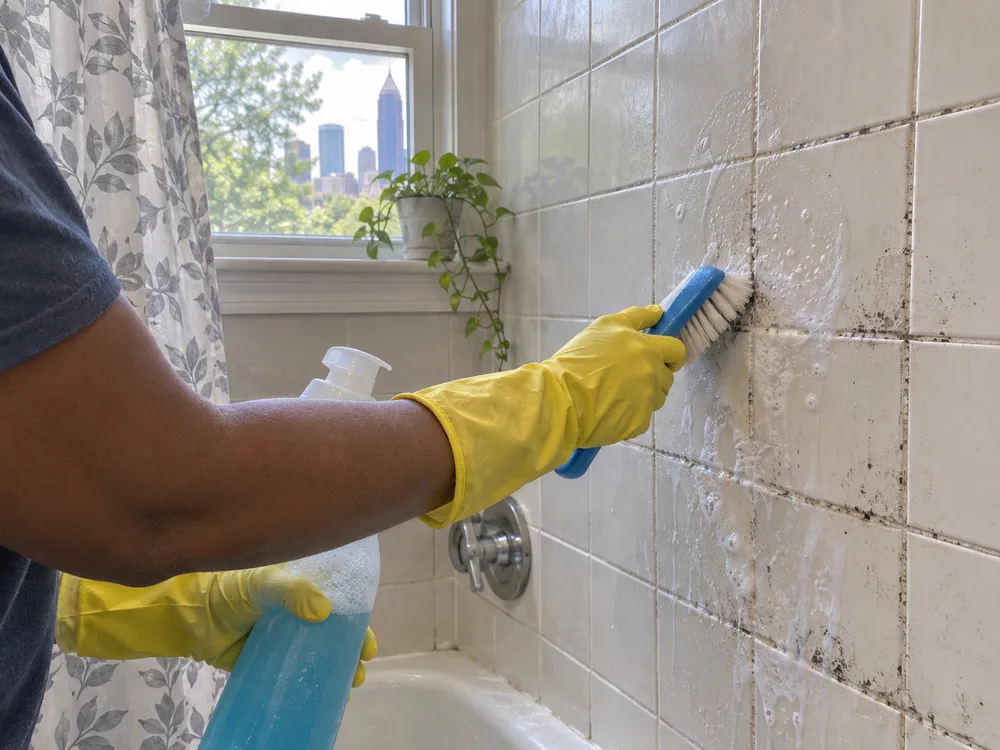
Water and detergent on hard surfaces, then dry them. The EPA says mold can be removed from nonporous surfaces by wiping or scrubbing with water and detergent (EPA). Porous items like drywall and carpet that are moldy may have to be thrown out.
Any safety warnings?
Never mix bleach with ammonia, which creates toxic fumes (EPA). Ventilate the room, and wear gloves and eye protection.
Common questions
Does bleach work on drywall mold?
Drywall is porous, and moldy drywall usually needs to be removed rather than sprayed.
Is vinegar better than bleach?
The EPA's guidance focuses on removing mold with water and detergent and fixing the moisture, not on a particular killer.
When should I call a professional?
The EPA says areas larger than about 10 square feet, sewage-related mold and hidden mold may need a professional.
Related guides
Sources
- EPA: Should I use bleach to clean up mold?
- EPA: Mold Remediation in Schools and Commercial Buildings, Chapter 3
- EPA: A Brief Guide to Mold, Moisture and Your Home
Last reviewed November 13, 2026. This guide is general information, not legal, insurance or medical advice.