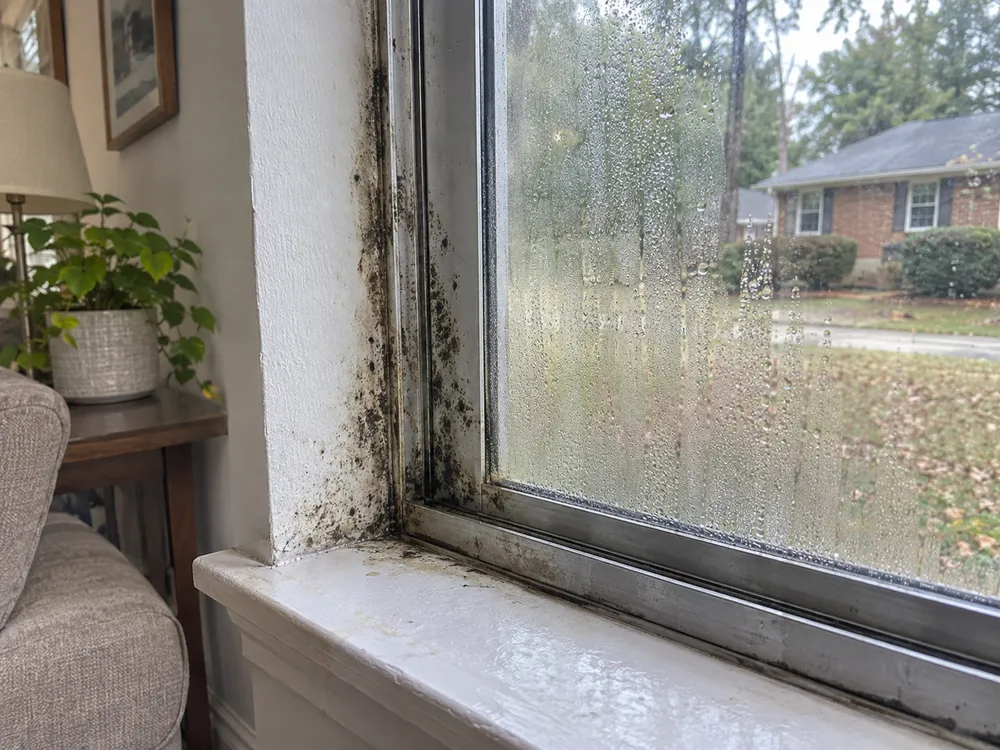
Why does mold grow on metal window frames?
Condensation. The EPA says condensation can be a sign of high humidity, and to act quickly when moisture collects on windows, walls or pipes (EPA).
How do I clean mold off metal frames?
Metal is nonporous, so it can be cleaned. The EPA says mold can be removed from nonporous surfaces with water and detergent and then dried (EPA). The EPA does not recommend bleach as a routine practice (EPA), and the LSU AgCenter advises against using bleach on metals (LSU AgCenter).
How do I stop it coming back?
Lower the humidity. The EPA recommends keeping indoor humidity below 60%, ideally 30 to 50% (EPA). Run bath and kitchen fans, and wipe condensation off the frames.
What if the glass is foggy between panes?
JELD-WEN says moisture between panes of an insulating glass unit can mean the seal has failed (JELD-WEN). That is a window repair, not a mold job.
Common questions
Is mold on window frames dangerous?
Small amounts are common. The EPA says you can usually clean areas under about 10 square feet yourself.
Why do my windows sweat in winter?
Warm, humid indoor air hits cold glass and metal. Lowering humidity reduces it.
Should I check the wall under the window?
Yes, if water runs down from the frame. The sill and drywall below can get wet.
Related guides
Sources
- EPA: A Brief Guide to Mold, Moisture and Your Home
- EPA: Mold Remediation in Schools and Commercial Buildings, Chapter 3
- EPA: Should I use bleach to clean up mold?
- LSU AgCenter: safe removal and cleaning of floors after a flood
- JELD-WEN: window inspection and maintenance
Last reviewed November 13, 2026. This guide is general information, not legal, insurance or medical advice.