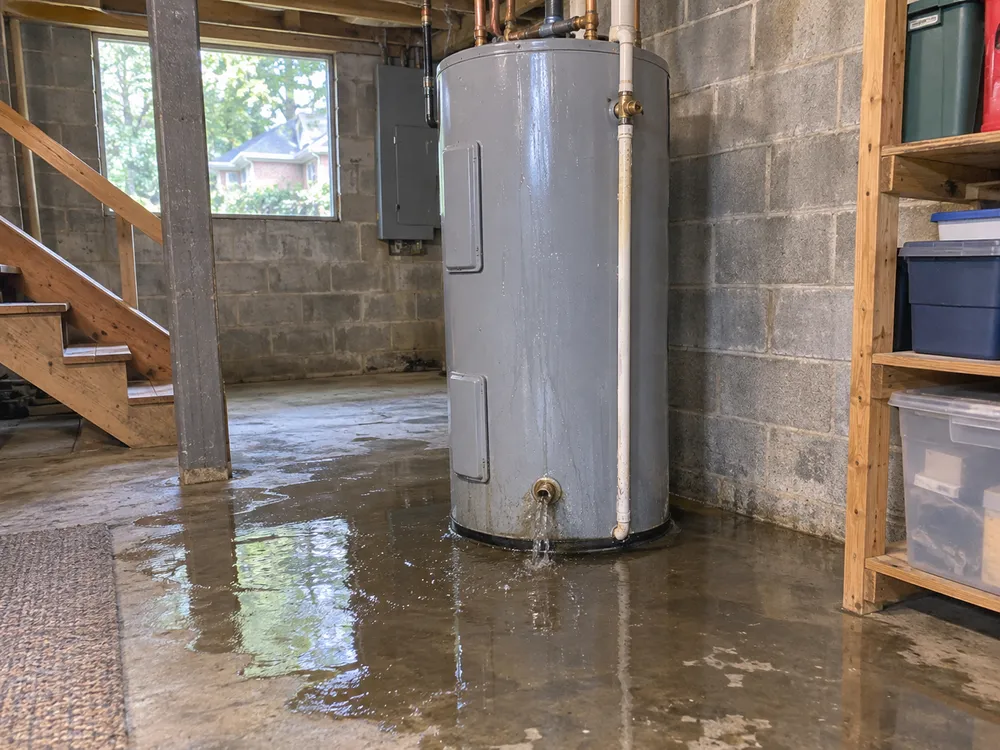
How do I stop a leaking water heater?
Close the cold water supply valve on top of the heater, then shut off the power for an electric unit or set a gas unit to its off or pilot setting, following the label on your heater. If the supply valve will not close, use the main shut-off. See where to find your main valve.
How much water can a water heater leak?
The tank alone holds 40 to 100 gallons, according to IBHS, and the supply line keeps refilling it until it is shut off (IBHS). A heater in a basement, garage or closet next to finished rooms can soak carpet, drywall and the subfloor.
When do water heaters usually fail?
IBHS research cited by the Connecticut Insurance Department found leak risk rises sharply once a tank is five years old, and three quarters of tanks fail before they are 12 years old (Connecticut Insurance Department). IBHS suggests replacing water heaters every 7 to 10 years and placing them in a drain pan connected to a drain (IBHS).
What has to be dried after a water heater leak?
Water from a water heater is Category 1, clean water (Massachusetts DPH). The EPA says to dry water-damaged areas and items within 24 to 48 hours to prevent mold growth (EPA). Carpet and pad, drywall at the base of nearby walls and the subfloor under the heater all need moisture readings.
Common questions
Is a leaking water heater covered by insurance?
The water damage from a sudden failure is often covered. The heater itself, as a worn-out appliance, usually is not.
Should I drain the water heater?
Follow the manufacturer's instructions on the label. Turn off the power or gas first, because hot water can scald.
Is water around the base always a tank leak?
Not always. A drip can come from the relief valve, a fitting or condensation. A plumber can tell you which.
Related guides
Sources
- IBHS: how to prevent interior water damage from plumbing and appliances
- Connecticut Insurance Department: preventing water damage (IBHS study facts)
- Massachusetts DPH: quick reference, water damage response in buildings
- EPA: A Brief Guide to Mold, Moisture and Your Home
Last reviewed November 13, 2026. This guide is general information, not legal, insurance or medical advice.