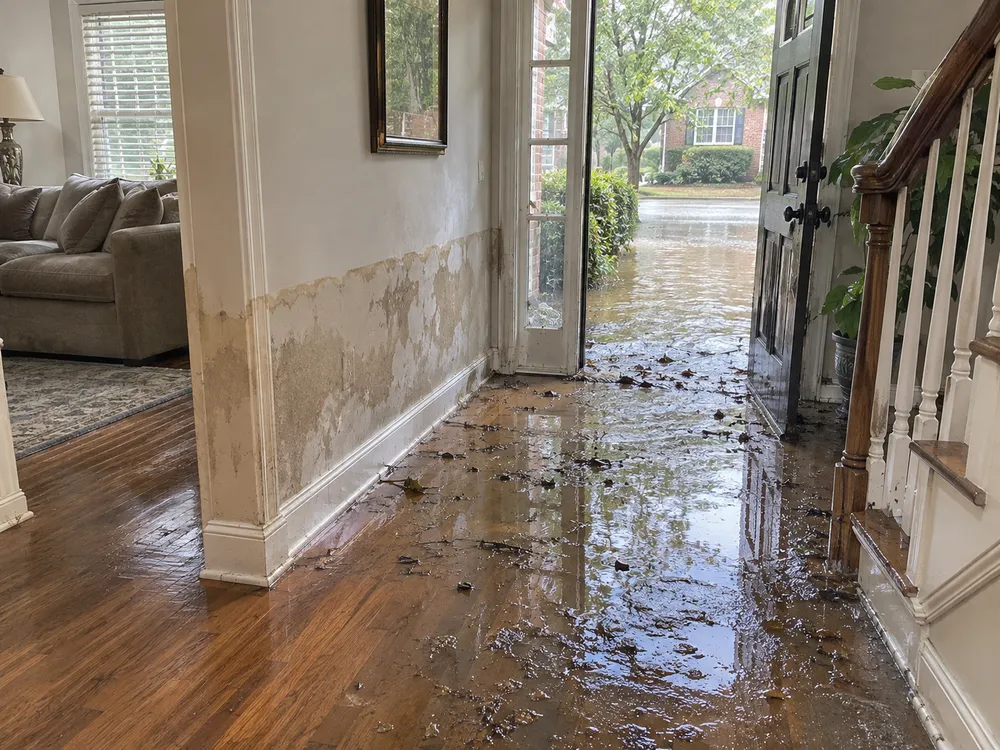
What is the difference?
Homeowners policies usually cover sudden, accidental water from inside, such as a burst pipe or appliance overflow. Georgia's insurance commissioner says a standard homeowners policy does not cover damage from flooding, and a separate policy must be bought through the National Flood Insurance Program (Georgia OCI).
General information
This page explains how homeowners insurance generally works, using state insurance regulators' guides. Your policy wording controls. Call your insurer or agent about your claim.
What counts as a flood?
FEMA defines a flood as a general and temporary condition of partial or complete inundation of two or more acres of normally dry land, or of two or more properties, one of which is yours (FEMA).
Can I buy flood insurance after a storm is coming?
Usually too late. FloodSmart says there is typically a 30-day waiting period before an NFIP policy takes effect, with some exceptions (FloodSmart). Most homeowners and renters policies do not cover flood (FloodSmart).
What about sewer backup?
Under the NFIP, sewer backup is covered only when it is a direct result of flooding (FloodSmart). Many homeowners policies offer a separate water backup endorsement; ask your agent.
Common questions
Is rain coming through the roof a flood?
No. Rain through a damaged roof is usually handled under the homeowners policy, not flood insurance.
Who sells flood insurance in Georgia?
Insurance agents sell NFIP policies. Georgia's insurance commissioner lists the NFIP number, 800-427-4661.
Does flood insurance cover my car?
No. A flooded car falls under auto comprehensive coverage, if you carry it.
Related guides
Sources
- Georgia Office of Insurance and Safety Fire Commissioner: safety tips for severe weather
- FEMA: NFIP terminology index, flood
- FloodSmart: what you need to know about buying flood insurance
Last reviewed November 13, 2026. This guide is general information, not legal, insurance or medical advice.