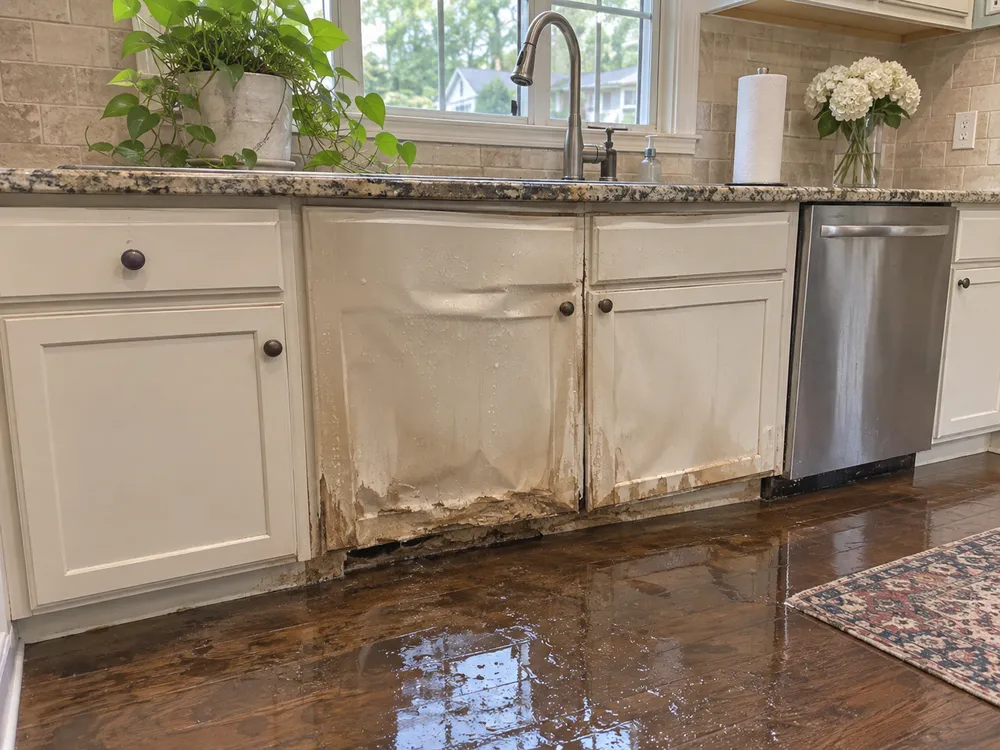
Where does water under kitchen cabinets come from?
Usually a sink, a dishwasher or an ice maker line. In an IBHS study, water damage from a sink averaged more than $7,000 per incident, and 44% of those incidents were caused by faulty supply lines (Connecticut Insurance Department). IBHS also warns that a leaking dishwasher can let water seep into surrounding cabinets and flooring (IBHS).
Read the video transcript
Water under your kitchen cabinets? It usually starts at a sink, a dishwasher, or an ice maker line. In an IBHS study, water damage from a sink averaged more than seven thousand dollars per incident, and forty-four percent of those incidents were caused by faulty supply lines. IBHS also warns that a leaking dishwasher can let water seep into surrounding cabinets and flooring. The hard part is under the cabinet base. The EPA says the subfloor under flooring must also be cleaned and dried, within twenty-four to forty-eight hours to prevent mold. To prevent a repeat, IBHS recommends braided stainless steel supply lines, and automatic shutoff valves or leak sensors. The full guide, with sources, is at 404waterdamage.com.
What should I do first?
Close the valve under the sink or behind the appliance, empty the cabinet, and dry what you can reach. The EPA says to dry water-damaged areas and items within 24 to 48 hours to prevent mold growth (EPA).
- Photograph the inside of the cabinet, the floor in front of it and the leaking part.
- Keep the failed hose or part for the adjuster.
- Leave the cabinet doors open and run a fan and dehumidifier.
Can the cabinets be dried in place?
Sometimes. The problem is the space under the cabinet base and the floor beneath it, which air cannot reach without opening something up. The EPA says the subfloor under flooring must also be cleaned and dried (EPA). Ask the crew how they will get air under the cabinets before they decide to remove them.
How do I keep it from happening again?
Washington's insurance commissioner suggests water leak detectors and silicone mats under sinks (Washington OIC). IBHS recommends braided stainless steel supply lines and automatic shutoff valves or leak sensors (IBHS).
Common questions
Are swollen cabinet bottoms covered by insurance?
A sudden leak, such as a supply line that bursts, is often covered. Slow drips that went on for weeks usually are not. Ask your insurer.
Do the cabinets have to come out to dry the floor?
Not always. Crews can sometimes dry under the cabinets without removing them. Ask what they plan to do and why before anything is torn out.
How often should supply hoses be replaced?
IBHS suggests replacing appliance supply hoses every five years with braided stainless steel hoses.
Related guides
Sources
- Connecticut Insurance Department: preventing water damage (IBHS study facts)
- IBHS: how to prevent interior water damage from plumbing and appliances
- Washington Office of the Insurance Commissioner: leaks, water damage and mold
- EPA: Mold Remediation in Schools and Commercial Buildings, Table 1
- EPA: A Brief Guide to Mold, Moisture and Your Home
Last reviewed November 13, 2026. This guide is general information, not legal, insurance or medical advice.