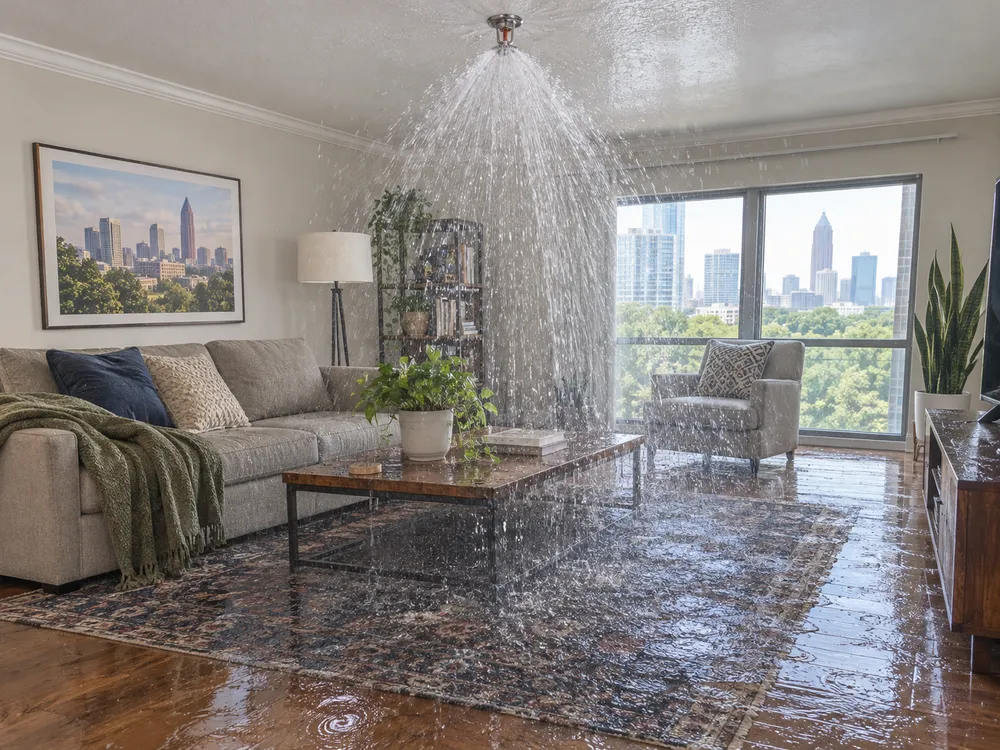
Do all the sprinklers go off at once?
No. The NFPA says only the sprinkler closest to the fire activates, and 90% of the time only one sprinkler operates. It adds that sprinklers use far less water than fire hoses and are not triggered by smoke (NFPA).
Is sprinkler water clean?
Not always. California's State Water Board notes that water in sprinkler lines can be stagnant and that some systems contain antifreeze additives (California State Water Board). Massachusetts DPH lists heating system water containing antifreeze as Category 3 (Massachusetts DPH).
How do I stop the water?
In a fire, let the system and the fire department do their job. For a broken sprinkler head or pipe with no fire, the system control valve shuts off the flow. In an apartment or commercial building, call building management, who usually control that valve.
What has to be dried?
Ceilings, walls, floors and anything below the head. The EPA says to dry water-damaged areas and items within 24 to 48 hours to prevent mold growth (EPA). Drywall is dried in place only if it has not swelled and the seams are intact (EPA).
Common questions
Can I turn off a sprinkler system myself?
In a home system, the control valve shuts it off. In apartments and businesses, building management usually handles it.
Is sprinkler water damage covered by insurance?
Accidental discharge is often covered. Call your insurer and building management right away.
Why does sprinkler water smell bad?
Water that has sat in pipes for a long time can be stagnant and discolored.
Related guides
Sources
- NFPA: home fire sprinkler myths and facts
- California State Water Resources Control Board: fire sprinkler memo
- Massachusetts DPH: quick reference, water damage response in buildings
- EPA: A Brief Guide to Mold, Moisture and Your Home
- EPA: Mold Remediation in Schools and Commercial Buildings, Table 1
Last reviewed November 13, 2026. This guide is general information, not legal, insurance or medical advice.