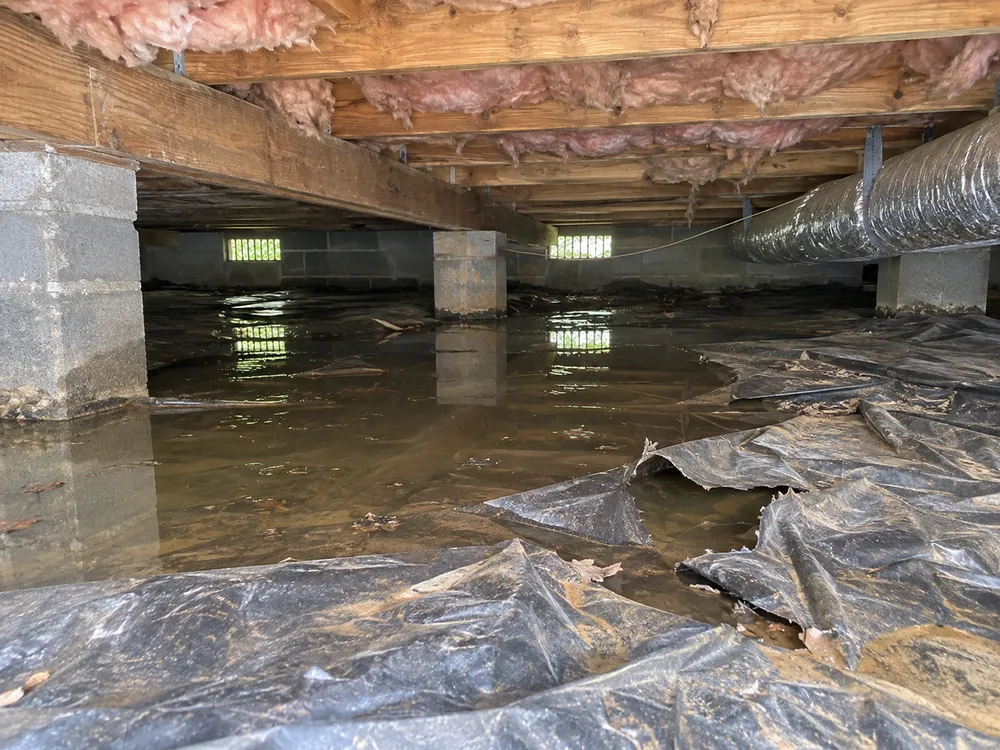
Why is there water in my crawl space?
Common sources are a leaking supply or drain pipe, gutters and downspouts that empty against the foundation, ground that slopes toward the house, groundwater after heavy rain, and condensation from ducts and AC lines.
What should I do first?
Shut off the main water if a pipe is leaking. Do not go into a crawl space with standing water and live wiring; the CDC says never to stand in water while turning power on or off (CDC). The building code also says exhaust air cannot be vented into a crawl space (International Residential Code).
How is a crawl space dried?
Water is pumped out, wet insulation is pulled, and the space is dried with dehumidifiers and air movement. The EPA lists wet fiberglass insulation as material to discard and replace (EPA). Keeping indoor humidity below 60% helps prevent mold (EPA).
Is crawl space water covered?
A sudden pipe break often is. Washington's insurance commissioner lists groundwater and foundation leaks among gradual damage most policies don't cover, and suggests checking the crawl space regularly (Washington OIC).
Common questions
Is a little water in the crawl space normal?
It is common after heavy rain in some houses, but standing water keeps humidity high and should be addressed.
What does a vapor barrier do?
It covers the ground to limit moisture rising into the crawl space. HomeGuide lists vapor barriers at $2 to $4 per square foot nationally.
Can crawl space water cause mold?
Yes. Wet insulation and floor joists can grow mold, and that air can move into the house.
Related guides
Sources
- CDC: reentering your flooded home
- International Residential Code M1501.1: exhaust outdoor discharge
- EPA: Mold Remediation in Schools and Commercial Buildings, Table 1
- EPA: A Brief Guide to Mold, Moisture and Your Home
- Washington Office of the Insurance Commissioner: leaks, water damage and mold
- HomeGuide: mold removal cost
Last reviewed November 13, 2026. This guide is general information, not legal, insurance or medical advice.